
Off-Season Conditioning for Hunting Dogs
Off-Season Conditioning for Hunting Dogs: Year-Round Fitness, Training, and Competition
The best hunting dogs don't have an off-season — they have a different season. A gun dog that runs a NAVHDA Natural Ability test in May, competes in AKC hunt tests through the summer, hunts dove in September, and runs an NSTRA event in October is never idle, never loses its fitness base, and arrives at every opener sharper and more capable than a dog that spent the same months on the couch. Off-season hunting dog conditioning isn't just about getting ready for the next season opener — it's about building a year-round partnership with a dog that is always working, always learning, and always improving.
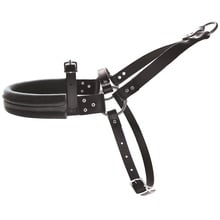
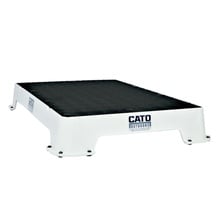
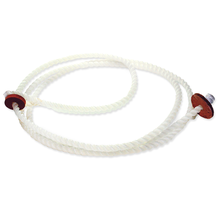
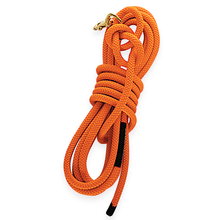
For hunters who don't compete, a structured gun dog fitness program starting six to eight weeks before opening day is the minimum. For handlers who add hunt tests and field trials to their calendar, the conditioning challenge shifts from seasonal preparation to year-round maintenance — and the rewards are a more capable hunting partner and a dog that gets more out of every season it has. The products below support both approaches — from check cords and training tools that keep obedience sharp through the summer, to year-round training gear that maintains drive and bird-finding instincts between seasons. Questions about conditioning your specific dog for your specific program, call us at 800-338-3647. We've been doing this since 1971.



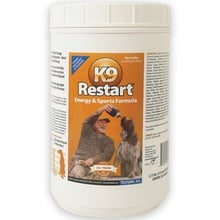
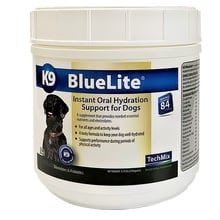
Why Off-Season Hunting Dog Conditioning Matters
A dog that goes from zero activity to a full day of hunting in the September heat is a dog at serious risk. Soft pads tear on cut cornstalk fields and frozen ground. Unconditioned muscles fatigue in the first hour and stay sore for days. Cardiovascular systems not prepared for sustained exertion overheat faster and recover slower. The injuries and setbacks that ruin opening week — pulled muscles, torn pads, heat exhaustion — are almost entirely preventable with consistent off-season work.
The fitness a hunting dog needs takes six to eight weeks of progressive conditioning to build from a resting baseline. That means starting no later than mid-July for a September dove opener, and no later than early September for an October pheasant season. Starting later compresses the program, forces faster progression, and increases injury risk. The dogs that are genuinely ready on opening day started their conditioning program before most hunters have thought about it.
Extending the Season: Hunt Tests and Field Trials as Year-Round Conditioning
The most effective off-season conditioning program isn't a conditioning program at all — it's a competition calendar. Hunt tests and field trials give a hunting dog structured, purposeful work that simultaneously maintains all four conditioning elements: physical fitness, obedience, mental sharpness, and drive. A dog running events year-round never fully deconditions, never loses its edge, and arrives at every hunting season opener with a level of preparation that purely seasonal hunters can't replicate.
The competitive calendar creates natural year-round structure across every major discipline:
| Season | Competition Opportunities |
|---|---|
| Spring (March–June) | NAVHDA Natural Ability tests for young dogs. AKC hunt tests (retriever, pointing breed, spaniel). HRC Started and Seasoned events. American Field and AFTCA trials in southern and western regions. Ideal for young dogs earning first titles before hunting season. |
| Summer (July–August) | AKC hunt tests continue year-round in most regions. HRC events through summer. NAVHDA Utility Preparatory tests. Prime conditioning season — cooler morning work sessions, water conditioning for retrievers. Build the fitness base for fall before heat peaks. |
| Fall (September–November) | NSTRA shoot-to-retrieve field trials run concurrent with hunting season. NAVHDA fall tests. AKC hunt tests and field trials. American Field and AFTCA championship season begins. A dog hunting and competing simultaneously is a dog at peak conditioning and readiness. |
| Winter (December–February) | American Field and AFTCA trials run through winter in southern states — Georgia, Mississippi, Alabama, Texas, Florida. Late waterfowl seasons continue through January. Indoor obedience maintenance and structured yard work keep dogs sharp through the coldest months. |
Hunt tests and field trials aren't a substitute for hunting — they're a complement that makes your dog a better hunting partner. The obedience, steadiness, and bird-finding skills evaluated in a hunt test are exactly the same skills that produce a great day in the field. A dog earning hunt test titles in the spring and summer is a dog that has been working, learning, and sharpening the precise abilities that matter most when the season opens. See our Field Trials & Hunt Tests page for competition gear, organization information, and event resources.
Physical Conditioning for Hunting Dogs: The FITT Program
For hunters building fitness from a seasonal baseline, professional trainers use the FITT principle to structure gun dog conditioning programs — Frequency, Intensity, Type, and Time. Applied to hunting dog fitness, here's what each element means in practice:
| Element | Application for Hunting Dogs |
|---|---|
| Frequency | Five to six sessions per week with one rest day for recovery. Consistency over the conditioning period matters more than any single workout. |
| Intensity | Start easy and progress gradually. The first two weeks should feel almost too easy. Increase duration before increasing intensity — overloading an unconditioned dog is how soft tissue injuries happen. |
| Type | Vary exercise to develop different systems. Long slow distance work builds aerobic base and VO2 capacity. Swimming builds cardiovascular fitness with minimal joint impact. Hill work builds hindquarter strength. Retrieving builds muscle and maintains drive simultaneously. |
| Time | Week 1–2: 20–30 minutes per session. Week 3–4: 45–60 minutes. Week 5–6: 60–90 minutes at hunting pace without significant fatigue. A dog still panting heavily 10 minutes after a session isn't ready for more volume yet. |
Off-Season Obedience Training: Don't Let the Foundation Erode
Off-season is the single best time to shore up any obedience gaps that showed up during last season, and the gaps always show up during the season, when fixing them is inconvenient and expensive in lost birds. A dog that broke at the shot twice in October needs steadiness work before April, not September. A dog whose recall got unreliable in late-season fatigue needs check cord refreshers through the spring.
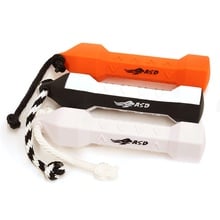
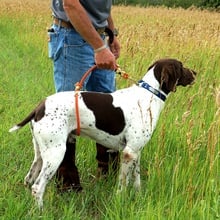
Keep obedience sessions short and consistent — 10 to 15 minutes three to four times per week is more effective than one long session on weekends. Work on the specific commands that showed weakness. Introduce new environments to proof commands under distraction. The check cord, hunting dog whistle training, and dummies that built your dog's foundation in puppyhood remain the most effective off-season obedience training toolkit available at any price point.
Off-Season Mental Conditioning: Keeping Your Hunting Dog's Drive Sharp
A hunting dog's mental sharpness, its enthusiasm for birds, its focus under pressure, its drive to work, can dull with inactivity just as surely as physical fitness does. Keeping that edge requires deliberate work, not just physical exercise.
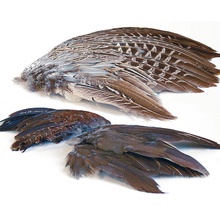
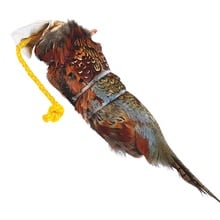
Regular retrieve sessions with bird scent dummies keep retrieve drive sharp and reinforce the association between work and reward. Scent work — tracking drags, hidden bird wings, planted dummies — gives a dog mental engagement that straight physical exercise doesn't provide. Introduction or re-introduction to live birds on a controlled training field keeps bird-finding instincts tuned and gives you a clear read on how your dog's skills have held through the off-season.
Off-Season Hunting Dog Nutrition: Adjusting for Lower Activity
A hunting dog burning 1,500 calories a day during the season needs significantly fewer calories during an off-season of moderate exercise. Maintaining season-level feeding through an inactive off-season produces weight gain that has to be reversed before conditioning can begin, which costs weeks of conditioning time and increases cardiovascular stress during reconditioning. Reduce caloric intake to match the actual activity level, maintain protein quality, and monitor body condition monthly.
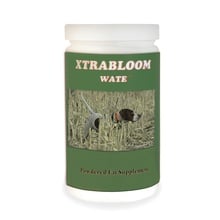
Joint supplements containing glucosamine and chondroitin are worth considering year-round for any dog doing serious field work; the cumulative stress of running in heavy cover, jumping obstacles, and working in extreme temperatures adds up over a season and a career. Starting supplement support before problems appear is significantly more effective than starting after. See our full range of joint supplements and conditioning health aids for options appropriate for dogs at every age and activity level.
Frequently Asked Questions: Off-Season Conditioning for Hunting Dogs
When should I start conditioning my hunting dog for the season?
Six to eight weeks before opening day at minimum — and earlier is better. For dove season openers in early September, start conditioning in mid-July. For October pheasant or waterfowl seasons, start in August. The goal is progressive fitness building over six to eight weeks, not a crash program in the final two weeks before the season opens. A dog maintained through the off-season with regular exercise needs less ramp-up time than a dog that has been completely idle.
Can hunt tests replace off-season conditioning?
For dogs running a full competition calendar — spring NAVHDA tests, summer AKC hunt tests, fall NSTRA events — formal off-season conditioning is largely unnecessary because the dog never fully deconditions. Regular competition provides structured physical work, obedience reinforcement, and drive maintenance simultaneously. For hunters who compete occasionally but don't maintain a consistent event schedule, structured conditioning in the six to eight weeks before opening day remains important. The ideal approach is both: compete year-round to maintain baseline fitness, and add targeted conditioning work four to six weeks before the most demanding hunts of the season.
What's the best exercise for off-season hunting dog conditioning?
Swimming is the single most effective off-season conditioning activity for most hunting dogs — it builds cardiovascular fitness and muscle without the joint stress of running on hard surfaces, and it's naturally enjoyable for most retrievers and many pointing breeds. For dogs without regular water access, long walks and easy runs on varied terrain build aerobic base effectively. Retrieving sessions with dummies or bumpers combine physical conditioning with drive maintenance, making them the most time-efficient off-season training tool available.
How much exercise does a hunting dog need in the off-season?
At minimum, 30 to 45 minutes of meaningful exercise five days per week. As the season approaches and conditioning ramps up, increase to 60 to 90 minutes at hunting pace. The specific amount depends on the dog's age, breed, current fitness level, and what season it's preparing for. A dog conditioning for a full week of pheasant hunting in South Dakota needs significantly more preparation than a dog hunting two Saturday morning dove shoots.
How do I condition an older or senior hunting dog differently?
Senior hunting dogs need the same fitness base but require more recovery time between sessions, lower-impact exercise modalities, and closer monitoring for signs of soreness or fatigue. Swimming is particularly valuable for older dogs because it builds fitness without joint stress. Reduce session intensity before reducing session frequency — maintaining the habit of regular work matters for a senior dog's mental health as much as its physical condition. Joint supplement support becomes more important with age. Consult your veterinarian before significantly changing an older dog's exercise program.
Should I work on obedience during the off-season?
Yes — and this is the best time to do it. There's no season pressure, no bird pressure, and no hunting-day schedule to work around. Fix the commands that showed weakness last season, proof obedience in new environments, and build the steadiness and whistle response that will make next season's hunting more productive. Short, consistent sessions — 10 to 15 minutes three to four times per week — are more effective than occasional long sessions. The whistle work you do in March and April pays dividends in October.
How do I keep my hunting dog's pads in condition during the off-season?
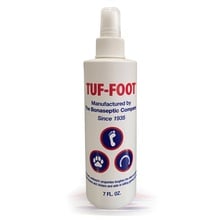
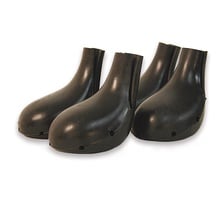
Regular exercise on varied surfaces — gravel paths, grass, packed dirt — naturally toughens pads through the off-season. Avoid exercising exclusively on soft grass, which does nothing to maintain pad toughness. Pad toughener products applied regularly through the conditioning period help harden pads before the season opens. A dog with soft, untoughened pads working a cut cornstalk field or frozen stubble in October will be sore within the first hour. See our hunting dog pad toughener and conditioning products used by serious hunters year-round.
Related Resources
- Hunting Dog Training Gear — check cords, dummies, and tools for year-round conditioning
- E-Collars & GPS Systems — maintaining field commands and range management year-round
- Training Books & DVDs — structured conditioning and training programs from proven experts
- Field Trials & Hunt Tests — year-round competition that keeps your dog sharp between hunting seasons
- Dove Season — the first test of your off-season conditioning program
- Gun Dog Puppy Training — building the foundation that year-round conditioning maintains
- All Activities — training and season guides for every discipline
Since 1971, Dogs Unlimited has helped serious hunters and competitive handlers keep their dogs in peak condition year-round. A well-conditioned dog is safer, more productive, and a better partner in the field — whether the season is open or not. Questions about conditioning products or training gear? Call us at 800-338-3647 — we're hunters too.