
Need help finding the best E-collar, GPS or Beeper System?
Click here and we'll guide you to your best choice.
Garmin No Bark Collars for Bark Control
Garmin No Bark Collars for Kennel and Travel Bark Control
Garmin no bark collars — sold under the BarkLimiter name — handle nuisance barking at the kennel, the dog box, and the truck without putting a training collar on a dog whose only job in that moment is to settle down and wait. Our Garmin GPS and e-collar systems department covers the complete platform for handlers running Garmin across tracking, training, and bark control, while Garmin e-collar accessories and replacement parts — collar straps, contact points, and charging cables — keep any collar working correctly through a hard rotation of kennel and field use. The BarkLimiter delivers consistent, automatic correction across repeated barking episodes without handler intervention, which matters most during travel days, at hunt camp, and on training grounds where the same behavior repeats in close quarters. Questions about the Garmin BarkLimiter and bark control options? Call us at 800-338-3647.
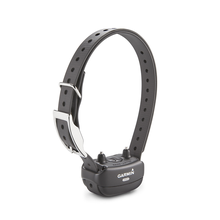


Choosing a Garmin BarkLimiter collar
Garmin BarkLimiter collars are used when you need bark control that stays consistent across repeated kennel and travel situations. Fit and contact placement matter more than most people think; a loose collar creates missed corrections and makes the whole system less predictable. Keep the collar snug enough to stay put through movement, but not so tight that it leaves irritation. If barking is only happening in one setting, work on the routine that triggers it so the collar isn’t doing all the heavy lifting.
No bark collar questions that come up in the field
What is a no bark collar meant to correct?
A no bark collar is meant to correct repeated nuisance barking when a handler can’t time a correction every time. A no bark collar works best when the barking is pattern-based, like kennel barking or barking during travel.
How is a no bark collar different from an electronic training collar?
A no bark collar focuses on barking behavior, while an electronic training collar is used for handler-directed training cues. A no bark collar is typically used in kennel or travel situations where timing a manual correction is hard.
When should a working dog wear a bark control collar?
A bark control collar makes sense during repeated problem windows such as kennel time, at the truck, or in a dog box when barking becomes habitual. A bark control collar should be used with a consistent routine so the dog understands what behavior triggers correction.
How tight should a Garmin BarkLimiter collar fit?
A Garmin BarkLimiter collar should fit snug enough that it doesn’t rotate or slide when the dog moves. A Garmin BarkLimiter collar that is too loose can miss corrections and create inconsistent feedback.
What should I do if the dog keeps barking with a no bark collar on?
A no bark collar setup should be checked for fit and contact placement before assuming the collar isn’t working. A no bark collar also works better when the kennel or travel trigger is addressed so the dog isn’t stuck rehearsing the same behavior.
Which Garmin BarkLimiter option should I choose for kennel barking?
A Garmin BarkLimiter option should be chosen based on how the dog is housed and how often the barking is happening in that setting. A Garmin BarkLimiter collar is most effective when the correction stays consistent during the exact window when kennel barking starts.