
E-Collar Training for Hunting Dogs: Communication, Control, and the Right System
E-Collar Training for Hunting Dogs: Communication, Control, and the Right System
An electronic dog training collar is the most powerful communication tool available to a hunting dog trainer — and the most misunderstood. Used correctly, a remote training collar gives you clear, consistent, immediate contact with your dog at distances a leash or voice command can never reach. Used incorrectly, it erodes the trust and drive that make a gun dog worth hunting over. The difference between those two outcomes is almost entirely about sequence: obedience first, collar second, always.
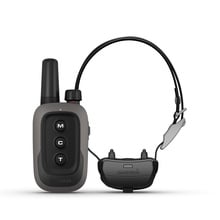
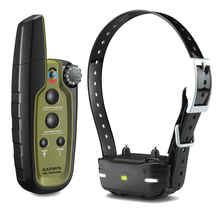
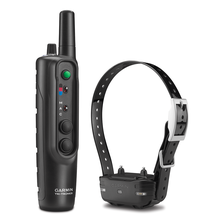
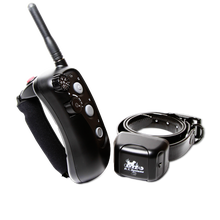
Dogs Unlimited has carried hunting dog e-collar and GPS systems since the technology was first proven in the field. The systems below cover the full range of what serious hunters and professional trainers use:
- Garmin GPS e-collar and tracking systems — the standard for pointing breeds in big country
- SportDog remote training collars — proven waterproof systems for retrievers and upland dogs
- Dogtra electronic training collars — precision stimulation for professional trainers
- DT Systems e-collars — reliable, field-tested systems at every price point
- E-Collar Technologies remote trainers — micro-stimulation systems favored by professional gun dog trainers
Not sure which system is right for your dog and your hunting situation? Call us at 800-338-3647 — we've been doing this since 1971 and we train with the products we sell.
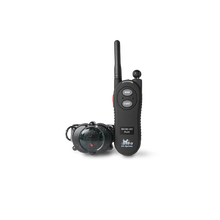
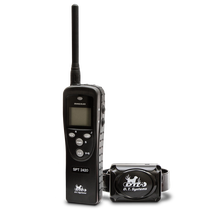
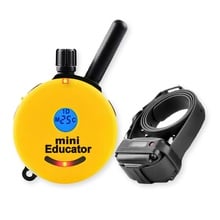
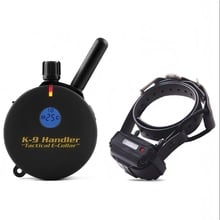
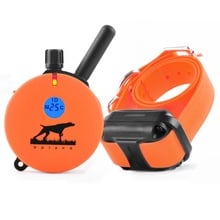
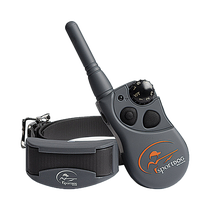
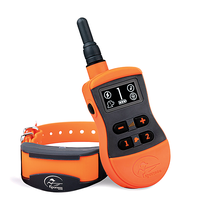
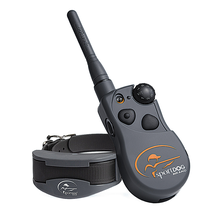
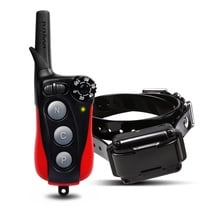
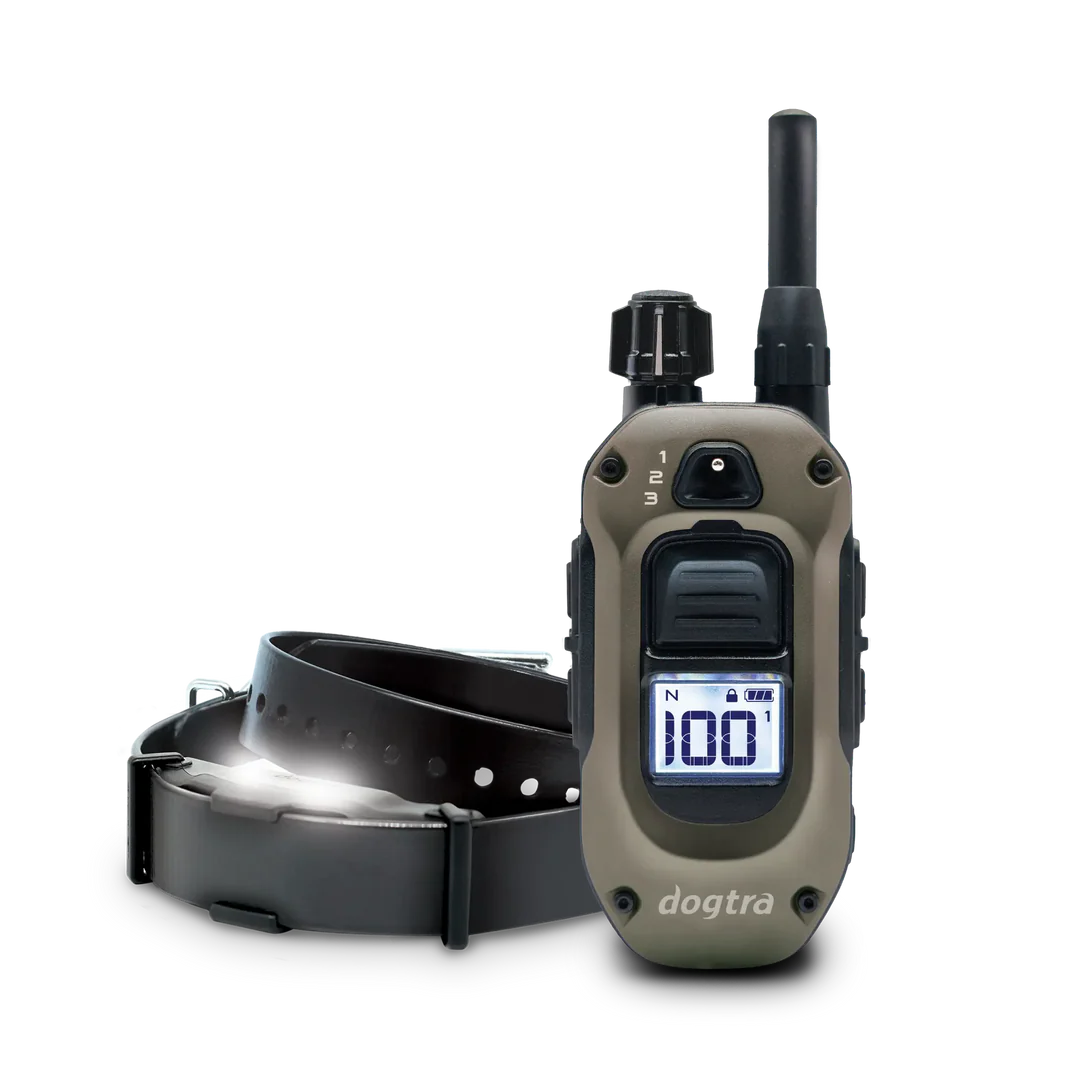
Remote Dog Training Collar Basics: What an E-Collar Does and Doesn't Do
The e-collar is not a teaching device. It does not teach a dog what to do — that is the job of the leash, the check cord, the trainer's voice, and repetition. The remote training collar reinforces what a dog already knows, at distances and in conditions where those other tools no longer reach. A dog that doesn't know the sit command will not learn it from an e-collar. A dog that knows sit reliably on a leash will learn to respond to it at 300 yards once the e-collar is properly introduced.
That distinction matters because it determines when the collar goes on. Too early — before the dog has solid obedience — and you create confusion, avoidance, and a dog that works to escape pressure rather than please its handler. At the right time — after obedience is reliable on a leash and check cord — the electronic training collar becomes an extension of the training your dog already understands. The transition is seamless when the foundation is there. When it isn't, no collar in the world fixes it.
Collar Conditioning: How to Introduce an E-Collar to Your Dog
Collar conditioning is the process of introducing the e-collar so the dog understands it as a communication signal — not a punishment. Done correctly, the dog learns that a low-level stimulation means the same thing as leash pressure: comply with the known command and the sensation stops. Done incorrectly, the dog learns that stimulation is random, frightening, and unrelated to anything it controls — which is how good dogs get ruined.
The sequence that works: put the collar on the dog during regular training sessions without activating it, so wearing the collar becomes normal and carries no anxiety. When you begin introducing stimulation, start at the lowest level the dog notices — not the lowest level on the dial, but the lowest level that produces a visible response, typically a slight ear flick or head turn. At that level, pair the stimulation with a command the dog already knows well, applying the stimulation at the same moment you would apply leash pressure. Release stimulation the moment the dog complies. The dog quickly learns that the stimulation is something it controls — comply with the command and it stops.
Work through all basic commands — here, sit, heel — on the e-collar with the check cord still attached as a backup. Only when each command is reliable on the e-collar alone, at short distance, do you extend range and reduce check cord reliance. This process takes days to weeks — not an afternoon. Handlers who rush it pay for it in months of remedial work.
When to Introduce an E-Collar: Timing by Training Stage
| Training Stage | E-Collar Role |
|---|---|
| 8 weeks – 6 months | No e-collar. Focus on socialization, basic obedience on leash, crate training, and retrieve drive. The collar worn but never activated builds a neutral association with the equipment. |
| 6 – 9 months | E-collar introduction begins when sit, here, and heel are reliable on leash. Begin collar conditioning at the lowest working level with check cord still attached. |
| 9 – 12 months | Extend range as commands become reliable off-leash. Begin using the e-collar for range management in the field. Introduce to hunting situations with collar on. |
| 12+ months | E-collar is standard field equipment. Use for recall, range, steadiness reinforcement, and safety. GPS integration expands to tracking and locating across big country. |
How to Choose the Best E-Collar for Hunting Dogs
Not all e-collar systems are built for the same job. The right system depends on what you hunt, how far your dog ranges, whether you need GPS tracking, and how many dogs you run simultaneously. Here's how to think through the decision:
Range matters most for wide-ranging pointing breeds hunting big country — a dog that regularly works 300 to 400 yards out needs a system with proven range well beyond that distance. Retrievers and spaniels working closer don't need the same range capability, but waterproofing rated for full submersion is non-negotiable for any waterfowl dog.
GPS integration combines tracking and training in a single system. For upland hunters running pointing breeds in heavy cover, the ability to see the dog's location and receive a point alert on a single handheld is the most practical field setup available today. Garmin's Alpha and Pro series are the standard for this use case, combining long-range GPS tracking with precise e-collar stimulation from one transmitter.
Stimulation levels matter more than most buyers realize. A system with 100+ stimulation levels gives you the precision to find and work at the exact level your individual dog needs — which varies by dog, by condition, and by situation. A system with 8 or 10 levels requires more guesswork and more risk of going too high. For hunting dogs, more levels are always better.
Multi-dog capability is essential for anyone running more than one dog. Most professional-grade systems from Garmin, SportDog, and Dogtra support multiple dogs from a single handheld — confirm the specific model's dog capacity before purchasing.
Frequently Asked Questions: E-Collar Training for Hunting Dogs
When should I start e-collar training my hunting dog?
Not before six months, and only after sit, here, and heel are reliable on a leash and check cord. The e-collar reinforces commands the dog already understands — it cannot teach commands the dog doesn't know. Most experienced trainers begin collar conditioning between six and nine months, when the dog's drive for game begins to compete with its obedience. That's the natural point at which the electronic training collar becomes a useful tool rather than a confusing one.
What stimulation level should I use on my e-collar?
Start at the lowest level that produces a visible response in your dog — typically a slight ear flick, head turn, or change in expression. That level will vary by dog, by coat, by weather conditions, and by the dog's arousal state. A wet dog is more sensitive than a dry one. A dog in high drive is less sensitive than a dog at rest. Find your dog's working level in a calm environment before applying stimulation in a training context, and adjust as conditions change. The goal is communication, not correction — you should never need high levels to reinforce a command the dog already knows.
What's the difference between an e-collar and a GPS collar?
An e-collar delivers remote stimulation — tone, vibration, or static — to communicate with your dog at distance. A GPS collar tracks your dog's location on a handheld device. Many systems now combine both functions in a single collar — you can track the dog's location and deliver a training cue from the same transmitter. For hunting dogs, a combined GPS and e-collar system is often the most practical field setup, particularly for pointing breeds in big country where line of sight is unreliable. See our combined GPS and e-collar systems for the full range of options.
Can an e-collar hurt my dog?
Used correctly at appropriate stimulation levels, an e-collar does not harm a dog. The stimulation at working levels is similar to the static charge from touching a doorknob — noticeable and attention-getting, not painful. The risk of harm comes from using levels that are too high, applying stimulation without the dog understanding the associated command, or using the collar as a punishment rather than a communication tool. Proper collar conditioning — introducing the collar carefully at the lowest effective level — eliminates these risks when done correctly.
What's the best e-collar for a retriever?
For retrievers, full waterproofing rated for submersion is the first requirement — not splash resistance, full submersion. Beyond that, look for a compact receiver that doesn't interfere with swimming, a stimulation range appropriate for the marking distances your dog works, and a transmitter ergonomic enough to operate in cold weather with gloves on.
What's the best e-collar for a pointing breed?
For pointing breeds, range and GPS integration are the primary considerations. A wide-ranging pointer or setter working 400 yards in heavy cover needs a system with proven long-range performance and the ability to show you the dog's location and alert you when it goes on point. Garmin's beeper and GPS collar systems are the most widely used for this application — combining point notification, location tracking, and e-collar training in a single setup. Beeper collars that change tone on point are a complementary tool many upland hunters run alongside GPS for immediate point notification without looking at a handheld.
Should I use an e-collar for basic obedience training?
Only after basic obedience is already trained through conventional methods — leash, check cord, voice, and reward. The e-collar is introduced to reinforce commands the dog already knows reliably, not to teach them for the first time. A dog that knows sit on a leash will learn to respond to sit on the e-collar quickly and without confusion. A dog that doesn't know sit will not learn it from an e-collar and will likely become confused and avoidant. See our e-collar training books and DVDs for structured programs from proven trainers that walk through the correct introduction sequence step by step.
Related Resources
- E-Collar Accessories — replacement contacts, chargers, and add-a-dog collars
- Whistles & Lanyards — the field commands that work alongside e-collar handling
- Health & Wellness — collar fit, contact point care, and keeping your dog's neck healthy
- Gun Dog Puppy Training — building the obedience foundation before the e-collar is introduced
- All Activities — training and season guides for every discipline
Since 1971, Dogs Unlimited has helped serious hunters and professional trainers find the right e-collar system for their dogs and their discipline. Not sure which system is right for you? Call us at 800-338-3647 — we train with the products we sell.