
Hunting Chaps and Gaiters Guide: Choosing the Right Leg Protection for Your Terrain
Monday, July 13th 2026
Quick Answer
- Thick brush, briars, cutovers: full chaps in waxed canvas or oiled cotton.
- Long walks, lighter cover, warm weather: gaiters, or a breathable chap like the Banded Tallgrass.
- Snake country: snake-rated chaps or gaiters, not standard brush gear.
- Field trials and hunt tests: the HuntSmith Collection line, built with a choice of transmitter, flap, or holster pockets and a made-to-order fit.
- Tight budget, standard brush:Dan's Hunting Gear 5 Star Chaps, the least expensive option in the lineup.
Pre-season is when you find out your chaps from last year have a blown seam or a zipper that won't run smooth. Better to find that out in your driveway in August than in a fencerow full of briars in October with a dog locked up on point twenty yards ahead of you.
By late summer the grass is dry and stiff, the burrs are already forming, and CRP fields are exactly the kind of cover that shreds a bare pair of jeans in about a quarter mile. Whatever's on your legs is going to take a beating before the season's out. This guide walks through what's actually different between chaps and gaiters, what each material is built to handle, and which piece in the Dogs Unlimited lineup fits your terrain.
Chaps vs. Gaiters for Hunting: What's the Difference?
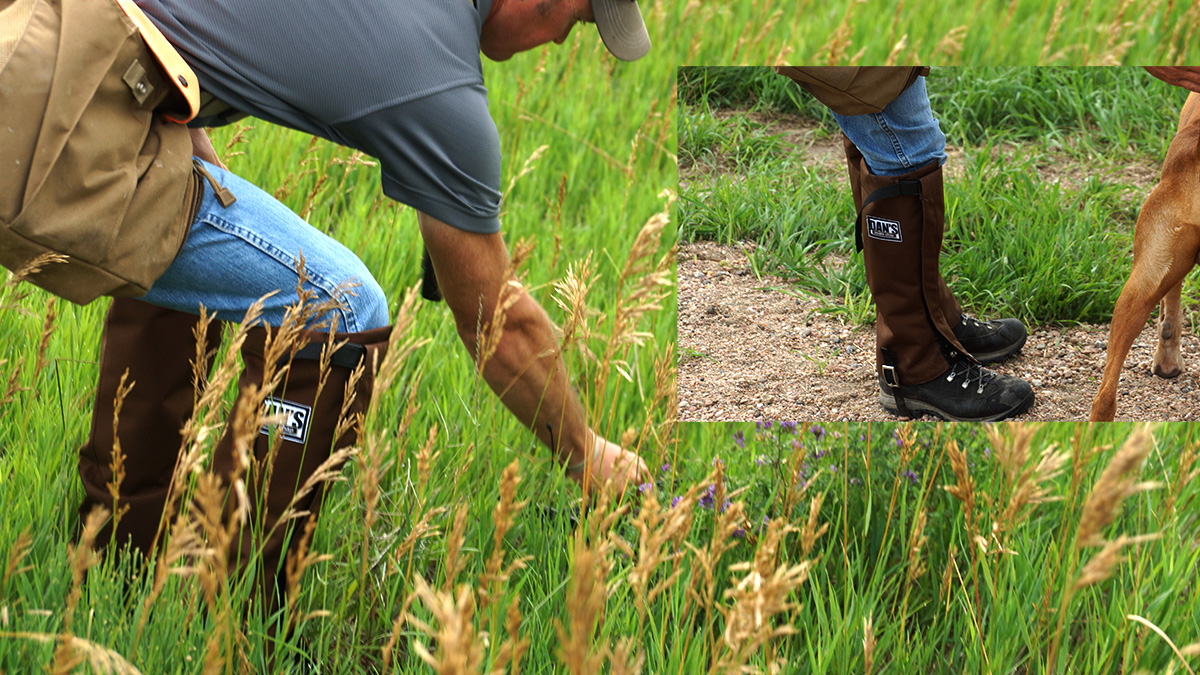
Chaps buckle or zip over whatever you're already wearing, running from ankle to thigh, and take the brunt of cover that works back at you: briars, barbed wire, sharp stubble, cactus. Gaiters go over just the lower leg and boot top, adding protection without the extra weight or bulk of a full chap.
The advantage of a chap is that it's not tied to one weight of clothing. You can wear a light base layer underneath on a warm opener and a heavier one once the weather turns, all under the same pair of chaps, instead of needing separate gear for separate temperatures. A dog that finishes the season without a torn-up leg is a dog that hunts next season too, and the same logic applies to whatever's protecting yours.
Neither one is the right answer across the board. What you're walking through, and how long you're walking through it, decides which one belongs on your legs for a day of upland hunting.
Best Hunting Chaps for Brush, Briars, and Everyday Cover
These are the workhorse chaps — the ones you reach for on a normal upland day when the cover is thick but you're not walking into rattlesnake country.
| Chap | Material | Notable Features |
|---|---|---|
| Banded Tallgrass Breathable Oiled Cotton Chaps | 8 oz. double-layered oiled cotton front, breathable back panel | Heel cut-out to reduce boot wear, YKK brass zippers, side pocket. Short, Regular, Long, and Husky sizing. |
| Boyt Pro Series Waxed Canvas Chaps | Waxed canvas | Belt straps adjust from 29" to 33" at the waist, reinforced stitching and hardware, ages in with a patina rather than wearing out. Reg. (26" thigh) and XL (30" thigh). |
| Dan's Hunting Gear 5 Star Chaps | Waterproof-lined shell | 24" YKK zipper, nylon belt strap, double-stitched seams. Sizes Medium to 2X-Large, inseam 26"–34". |
The Tallgrass earns its keep on warmer days — the breathable back panel matters when you're working a dog through 80-degree opener weather and don't want to overheat from the waist down. The Boyt waxed canvas leans toward hunters who want gear that looks and wears like it's been in the field a decade, and the Dan's 5 Star is the straightforward option if you want solid protection without the higher price tag of oilcloth or waxed canvas.
What Wearing Chaps All Day Actually Feels Like
Spec sheets don't tell you what a chap sounds like at forty yards or how it feels after four hours. A stiff nylon shell that hasn't broken in yet will announce you to every bird in the county before your dog does. Oilcloth and waxed canvas move quieter once they've taken a season or two of wear, which is part of why handlers who spend entire days afield gravitate toward them over a stiff synthetic.
Heat is the other tradeoff nobody puts on a spec sheet. A waterproof-lined chap that's dry as a bone in October rain will have you sweating through your base layer on a September opener. That's the real argument for a breathable option like the Tallgrass on warm-weather hunts, and it's the same reason snake country in hot weather calls for a lighter, dedicated snake chap or gaiter instead of your heaviest all-purpose pair.
Weight matters most on the days you're covering the most ground — a field trial stake, a long walk-up hunt, a training day that runs past lunch. A few extra ounces don't register in the first mile. They register in the fifth.
Field Trial Chaps and Retriever Chaps for Handlers
The HuntSmith Collection line, made by Shinnery Enterprises, is a step up in both price and purpose. These are oilcloth chaps designed with a working handler in mind, not just a weekend hunter.
Field Trial Chaps
100% oilcloth with a 10 oz. cotton canvas lining, solid brass hardware, and calf-skin cuffs. Built with an extra inch of thigh room and a zip-to-hip design for long days of walking and handling in mixed cover. A transmitter, flap, or holster pocket can be added to either leg.
Retriever Chaps
Same oilcloth-and-canvas construction, with a "One Leg At a Time" Velcro adjustment and a choice of transmitter, flap, or holster pocket on either leg. Cut for the wet edges and waterlogged grass that come with retriever work.
Riding Chaps
Premium Australian oilcloth with a leather waistband and hem, customizable length, and the same transmitter, flap, and holster pocket options. Built for handlers who spend the day in the saddle.
All three are made to order, so plan on a three- to six-week lead time before opening day, not after your first hunt of the season. That's the tradeoff for a chap built to your measurements instead of pulled off a rack.
Snake Chaps and Snake Gaiters for Hunting
Around 8,000 people are bitten by venomous snakes in the U.S. every year, and more than half of those bites land on the leg. Standard chaps stop briars. They don't stop a rattlesnake strike. If you're hunting or training in edge cover, creek bottoms, or grass lines where you can't see what you're stepping into, that's the distinction that matters most.
Coverage height is the practical difference between the two categories here, not just leg length in inches. Snake gaiters run calf-high, giving up coverage above the knee in exchange for less weight on a long walk. Full snake chaps run ankle to thigh, and the extra coverage is worth the added weight in terrain where you can't see the ground clearly — tall grass, blowdown timber, dense brush — since a strike in that kind of cover isn't limited to boot height.
| Snake Protection | Coverage | Material |
|---|---|---|
| Dan's Hunting Gear Snake Protector Chaps | Full leg | Triple-layer 1000-denier fabric, 24" side zip. Sizes M–2XL, inseam 26"–34". |
| Dan's Hunting Gear Snake Protector Gaiters | Lower leg | 1000-denier facing fabric, water-resistant, briar-proof, adjustable buckle and strap. Sizes M/L/XL. |
| TurtleSkin SnakeArmor Total Protection Snake Chaps | Full leg, ankle to thigh | Patented ballistic fiber and polyester weave, knee-high zipper, tested against live rattlesnakes. Regular and Husky fits, inseam 27"–35". |
| TurtleSkin SnakeArmor Gaiters | Lower leg | Same ballistic weave, under 6 oz. per gaiter, reversible, one size fits most. |
The price gap between the Dan's Hunting Gear line and TurtleSkin's SnakeArmor is real, and so is the difference in what you're paying for. TurtleSkin's fabric is tested against live rattlesnakes and weighs a fraction of what most snake gear runs, which matters if you're covering miles of edge cover on a field trial course rather than a short walk near the truck. Dan's Hunting Gear gets you solid, briar-proof, water-resistant protection at a price that makes sense for a hunter who wants a reliable second layer without the premium cost.
Chaps
- Full leg coverage from ankle to thigh
- Best choice for thick brush, briars, and barbed wire
- Standard for snake protection when exposure is high
Gaiters
- Lighter and less bulky for long walking days
- Faster to put on and take off over boots
- Less coverage above the knee — not the right call in heavy brush
Getting Ready Before Opening Day
Late summer is the right time to deal with this, not the week before opener. A few things worth doing now:
- Try them on with your boots. Chaps and gaiters both need to clear your boot tops without bunching, and that's easier to catch in the driveway than in the field.
- Run a training session in them. A stiff new chap or an unfamiliar buckle shouldn't be a surprise on opening morning.
- Check the zipper and seams on last year's gear. A worn zipper or a split seam is a maintenance problem in August and a field problem in October.
- Order made-to-order chaps early. The HuntSmith Collection line runs three to six weeks for delivery, which means late summer is close to the last safe window before the season opens in most states.
Frequently Asked Questions
Can I wear the same chaps in warm and cold weather?
Yes, and that's one of the real advantages of a chap over dedicated brush pants. Wear a light base layer underneath on a warm opener and a heavier one once the weather turns, all under the same pair, instead of needing separate gear for separate temperatures.
Do chaps make noise when you're walking through brush?
Stiff synthetic materials can announce you well before your dog does, especially before they've broken in. Oilcloth and waxed canvas tend to move quieter once they've seen a season or two of wear, which is part of why handlers who spend full days afield often prefer them over a stiff nylon shell.
Will chaps make me overheat on a warm opener?
A waterproof-lined chap that's built for October rain can feel like a sauna in September heat. A breathable option with a vented back panel handles warm-weather openers better, and it's worth treating snake protection as its own warm-weather kit rather than layering it under a heavier chap.
How much leg coverage do snake gaiters give up compared to full snake chaps?
Snake gaiters run calf-high, so they give up everything above the knee in exchange for less weight and bulk on a long walk. Full snake chaps run ankle to thigh, which matters most in terrain where you can't see the ground clearly, since a strike in that kind of cover isn't limited to boot height.
How should I size chaps for a comfortable fit?
Measure the widest part of your thigh and add two to three inches for the fabric to sit right. For inseam, most hunters subtract two to three inches from their regular jeans inseam, since chaps ride slightly higher than a pant leg.
How do I care for oilcloth or waxed canvas chaps after a hard day?
Wipe off mud and debris and let the fabric air dry away from direct heat. Check the seams for wear before you put them away, and condition leather cuffs or waistbands periodically so they don't dry out and crack.
How far ahead should I order made-to-order chaps before the season opens?
Plan on a three- to six-week lead time for made-to-order lines like the HuntSmith Collection. Ordering in late summer is close to the last safe window if you want them broken in, not straight out of the box, by opening day.
Related Resources
As always, our goal here at Dogs Unlimited is to help you Make Your Good Dog Better — and keep your own legs in one piece while you do it.