
Introducing Your Puppy to Birds: A Step-by-Step Guide
Wednesday, July 15th 2026
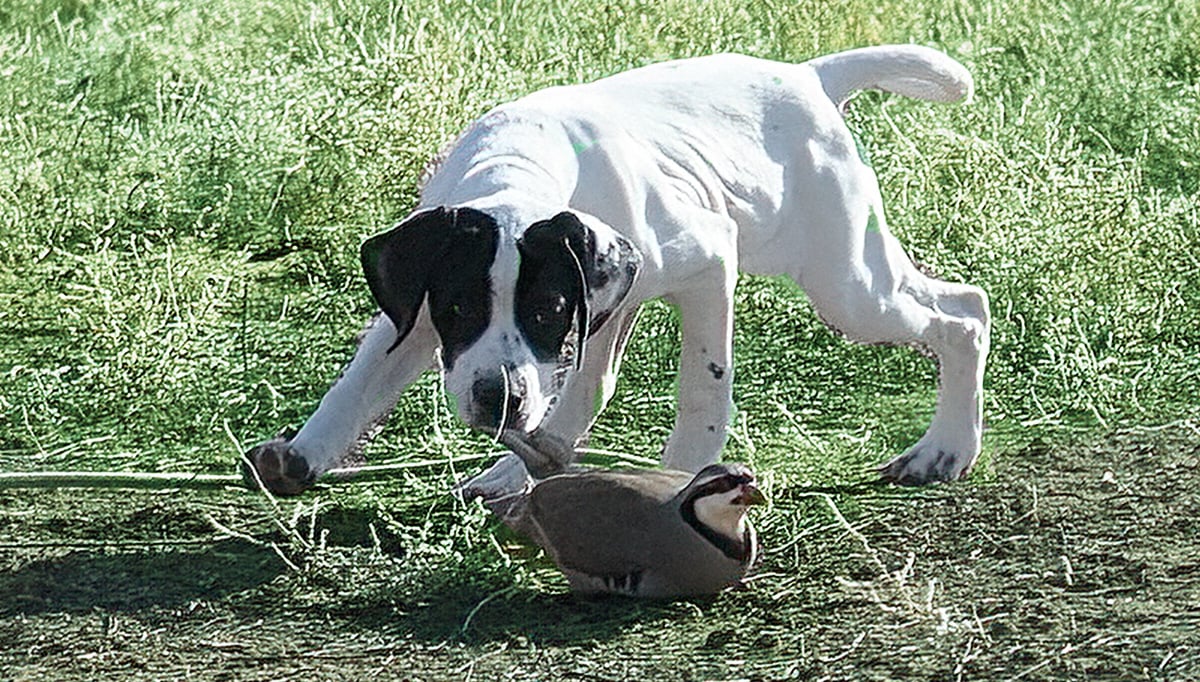
The first bird your puppy ever sees should not be the one that flushes wild on opening day. It should be a pigeon in the yard, on a warm afternoon with nothing else going on, weeks or months before the season means anything to either of you. What happens in that first encounter shapes how the dog feels about birds for the rest of its career.
Get it right and you have a dog that lives for the moment a bird gets up. Push too hard too soon, and you can spend seasons trying to undo it.
Why Timing Matters
A puppy that gets its first real bird exposure in October, three weeks before the trip you have planned, is starting from behind. Confidence around birds takes repetition, and repetition takes time you do not have if you wait until the season is already on the calendar.
Mid-summer is the window. The puppy has had a few months to settle into basic house manners, the weather is stable enough for regular short sessions, and there is no pressure to rush any part of the sequence. A puppy introduced to birds in July gets months of unhurried repetition before opening day asks anything of it. A puppy started in September doesn't get that time.
What Should Already Be in Place
Bird introduction is not the first thing you teach a puppy. It works best layered on top of a foundation that already exists:
- A puppy that walks on lead without a fight and comes back reasonably well when called
- Some comfort with a check cord as a management tool, not a correction tool
- A recognizable name response and a whistle the puppy already associates with something good
None of this needs to be finished. It needs to be started. A 20-foot check cord with a solid core and rubber-sealed ends gives you control without a fight during these early sessions. The stiffness keeps it from tangling around legs and cover while the puppy is focused on something more interesting than you. A whistle introduced now, paired consistently with something the puppy already likes, saves you a step later.
The Gear for Bird Introduction
| Gear | Use in this stage | Notes |
|---|---|---|
| Tip-Up Bird Releaser | First live flushes | No springs or moving parts, so there's no mechanical noise competing with the flush itself. Foot-operated, directs the flush away from handler and dog. Built for quail, pigeon, and chukar. |
| PRO 209 Blank Revolver | Gunfire introduction, later stage | Lightweight at 12 ounces, hunter-orange finish for visibility on the line. Only introduced once the puppy is already flushing birds with confidence, starting at real distance. |
| Natural Flush Remote Launcher | Next step, once basics are solid | Remote-triggered, quiet-release springs, up to 400-yard range. Built for the pointing and stop-to-flush work that comes after bird introduction, not for the first sessions. |
| Avatar Upland Hunting Vest | Carrying birds to and from sessions | Vented bird pockets built specifically for live training birds, with single-handed access. Useful once you are running enough sessions that a bird bag stops being enough. |
The Sequence
Step 1: Scent and Calm Exposure
Before there is any flush, there is scent. Let the puppy investigate a bird in a training coop or a bird bag at its own pace, on lead, with no pressure to interact a certain way. Some puppies dive in immediately. Others hang back and circle before they get curious. Both are normal. What you are watching for is curiosity building, not fear fading. If the puppy is worried, you have moved too fast.
Step 2: The First Flush
Once scent exposure is producing tail-wagging interest instead of hesitation, move to a live flush with the puppy on the check cord. This is where the tip-up releaser earns its keep: no springs, no mechanical noise to compete with the flush itself. You will need a helper for this step: one person handling the puppy on the check cord, the other positioned at the releaser to trip it with a foot at the right moment. Set the puppy up downwind, let it work in on scent, and have your helper release the bird when the moment is right. The burst of feathers and motion is the entire lesson. Let the puppy chase if it wants to, and let the cord trail as a drag rope so you can round up an excited puppy rather than fight it. Stopping the puppy cleanly at 20 feet is a skill for later. Right now the cord is there for management, not correction. That chase instinct is exactly what you are trying to build.
Step 3: Repetition Without Escalation
Run the same sequence (scent, approach, flush) for several sessions before you add anything new. Puppies build confidence through repetition of something that already works, not through a series of increasingly complicated tests. If a session goes well, resist the urge to make the next one harder. Two or three short, successful sessions a week will do more than one long session that pushes too far.
Step 4: Adding the Gun
Gunfire comes last, and it comes slowly. Once the puppy is reliably chasing flushed birds with obvious enthusiasm, have a second person fire a blank pistol from 100 yards or more during a flush, well behind the puppy. Watch the reaction. If the puppy does not break stride, the distance can close gradually over future sessions. If there is any hesitation, back off the distance and give it more sessions before trying again. A puppy that goes gun-shy at this stage is almost always a puppy that had gunfire introduced too close, too loud, or too soon relative to its comfort with the bird itself.
By Discipline: What Comes Next
English Pointers, GSPs, Brittanys, Vizslas
Once desire is established, pointing breeds move toward staunching on point: holding steady while the handler flushes. That work builds directly on the confidence from these early sessions and should not start until the dog is already reliably excited by birds.
English Springer Spaniels, Boykin Spaniels
Flushers move toward a controlled quarter and a flush that happens on cue rather than the moment scent is found. The bird desire built here is the engine; the control comes later and should never be layered on before the desire is real.
Labrador Retrievers
Retrievers take this same foundation into marking and delivery work. A young Lab that has learned to chase a flushed bird with real enthusiasm is a much easier dog to carry into formal marking drills than one that has never seen a bird move.
The Common Thread
Regardless of discipline, the sequence above does not change. Desire and confidence come first. The specific skills that make a finished bird dog come after, built on top of a dog that already wants what you are asking it to do.
Frequently Asked Questions
What age should I introduce my puppy to birds?
Most trainers start scent and calm exposure between 8 and 12 weeks, once basic house manners are in place, and move to live flushes closer to 4 to 6 months once the puppy has some leash and recall foundation.
Do I need a gun dog whoa command before introducing birds?
No. Bird introduction happens before formal steadying work. The goal at this stage is confidence and desire, not obedience. Whoa and quarter come later, once the dog already wants birds.
What birds should I use for a puppy's first exposure?
Pigeons and quail are the standard choice. They are easy to source, size-appropriate for a young dog, and low-risk if handled with basic care around disease and cleanliness.
When should I add gunfire to bird introduction?
Only after the puppy is flushing and chasing birds with clear enthusiasm, and only starting at a distance with a blank pistol. Introducing gunfire before the puppy is confident around birds is the most common cause of gun-shyness.
My puppy seems scared of the bird instead of excited. What do I do?
Back up a step. Go back to calm scent exposure at a distance the puppy is comfortable with, keep sessions short, and let the puppy's curiosity lead. Do not force contact with the bird.
Does bird introduction work the same for pointing breeds, flushers, and retrievers?
The early stages are the same for all three: build desire and confidence first. What changes is what comes next: pointing breeds move toward steadiness on point, flushers toward controlled flush, and retrievers toward marking and delivery.
How many bird exposure sessions does a puppy need before hunting season?
There is no fixed number. What matters is consistency: short, positive sessions spaced out over weeks rather than a handful of long sessions crammed into the final weeks before opener.
Related Resources
As always, our goal here at Dogs Unlimited is to help you Make Your Good Dog Better — starting with the very first bird.