
Match Your GPS System to Your Terrain, Your Dog, and the Worst Day You Might Have
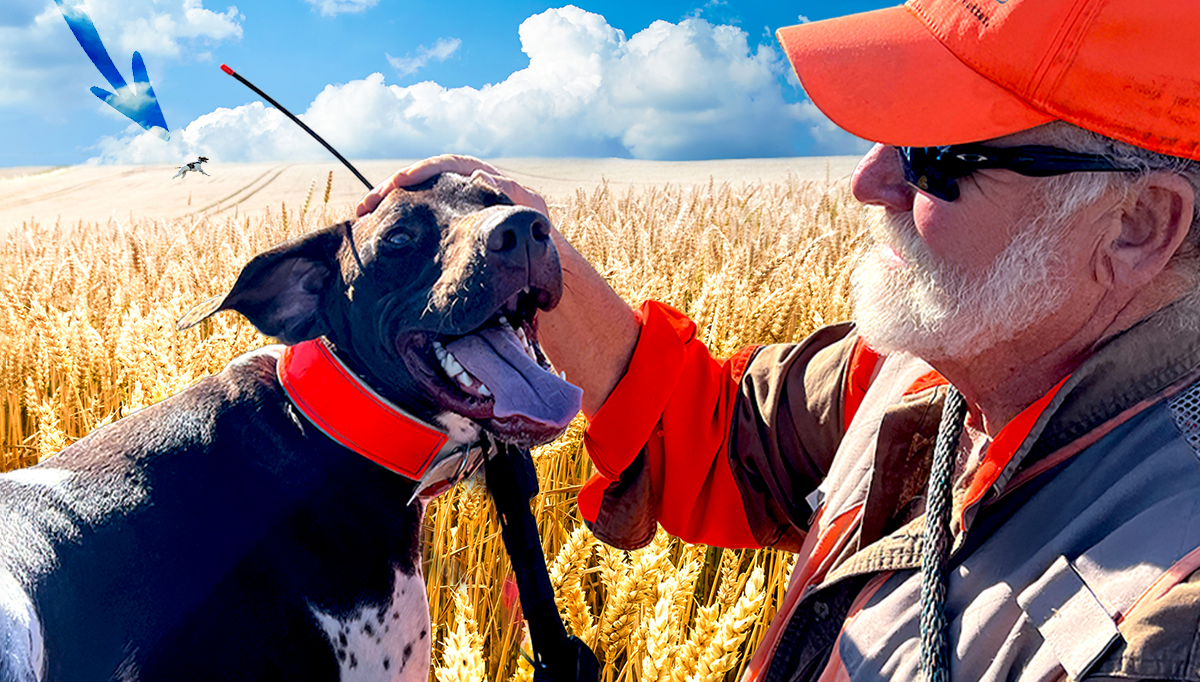
A GPS collar is only as useful as its range in the country you hunt. Buy too little and you're blind the moment your dog pushes over a ridge or disappears into cattails. Buy more than your terrain demands and you've paid for capability you'll never use. The right answer depends on where you hunt, what you're hunting, and how your dog works — not on what the biggest number on the spec sheet says.
This post breaks down what GPS range actually means in the field, which terrain demands what, and how the Garmin PRO 550 Plus, Garmin Alpha 300, Dogtra Compass, and the Dogtra Pathfinder2 Mini Compass fit different hunting situations. If you're working through the full system decision — handheld vs. collar options, Garmin vs. Dogtra — our Garmin GPS system comparison covers that ground.
Quick Answer
- Quail, woodcock, grouse in timber: 1–2 miles of reliable range is enough for most situations
- Pheasant in CRP and standing corn: 3–4 miles gives you a real margin
- Sharptail and Hun on open prairie: You want 9-mile capability — dogs disappear fast on a big wind
- Waterfowl: Range matters less than waterproofing and mark reliability; most retriever work is within sight
- Multiple dogs or guiding: Prioritize tracking capacity and display clarity over maximum range
- Any dog with a history of running deer, or drawn by coyotes: Size to the worst day — 9-mile capability regardless of how close your dog normally hunts
How These Systems Actually Work
A GPS collar for a hunting dog is not the same thing as the GPS in your phone or your truck. Understanding the difference explains why range is a real constraint, and why terrain affects it the way it does.
Your phone's GPS and your car's navigation system are receivers only. They listen to signals broadcast by satellites orbiting roughly 12,500 miles above the earth, calculate their own position from those signals, and display it. The satellites know where they are. The receiver on the ground figures out where it is by measuring the time it takes signals from multiple satellites to arrive. No communication between two units on the ground is required.
A hunting dog GPS system is different. It's a two-unit system: a GPS receiver in the collar worn by your dog, and a GPS receiver in the handheld you're carrying. Both units independently determine their own positions from satellite signals. The collar knows where it is. The handheld knows where you are. But to get that information from the collar to your screen, the two units have to talk to each other — and that communication happens over radio, not through satellites.
The Garmin Alpha system uses VHF radio for that collar-to-handheld link. VHF stands for Very High Frequency, a band of radio waves in the 30–300 MHz range. Garmin's owner's manual for the Alpha 300 confirms it operates in the 152–169 MHz portion of that band. Dogtra's Compass and PATHFINDER2 systems use radio communication between collar and handheld as well, though Dogtra does not specify the exact frequency band in their published materials.
VHF and similar radio signals travel well over open terrain, but they travel in essentially straight lines. That's where the industry term "line of sight" comes from — it's an accurate description of how these radio waves behave. The signal between collar and handheld works best when there's nothing solid between them. Put a ridge between your dog and your handheld and the signal weakens or disappears, even if the dog is only a mile away. Put the dog in a creek bottom while you're on high ground and the signal may carry farther than expected, because elevation helps. Dense timber, rolling hills, canyon walls — all of it affects the radio link between the two units on the ground.
The GPS satellites are not the limiting factor. Both the collar and the handheld are still receiving satellite signals and calculating positions accurately. The breakdown, when it happens, is in the radio link between the two units. This is why stated range figures are measured in open, flat terrain with unobstructed line of sight — that's the ceiling of what the radio link can do under ideal conditions. Real hunting country is not ideal conditions.
Sources: VHF band definition (30–300 MHz) is standard radio spectrum. Garmin Alpha 300 operating frequency (152–169 MHz) per Garmin Alpha 300 Owner's Manual specification table. Dogtra radio frequency not specified in published Dogtra materials.
What GPS Range Specs Actually Mean in the Field
Every GPS system publishes a maximum range figure. That number is measured under ideal conditions: open ground, clear line of sight between collar and handheld, no terrain in between. In the field, you'll see less. Rolling hills, creek drainages, heavy timber, dense cattails — all of it reduces effective range. A system rated at 9 miles outperforms one rated at 2 miles in any terrain, but neither hits its spec number in the worst cover.
What the range spec tells you is the ceiling of the system's capability. What matters is whether that ceiling is above the distances your dog actually runs in your actual country. For a Brittany working brushy quail cover in Texas, 2 miles of ceiling is probably fine. For an English Pointer running Kansas wheat stubble on a hard south wind, 2 miles isn't a ceiling — it's a wall.
Range by Terrain and Species
Quail, Woodcock, Grouse in Timber
Dogs working quail brush, aspen runs, or grouse woods rarely push more than a quarter mile in any direction. Dense cover naturally keeps the dog closer, and you're often moving to the dog rather than the other way around. Reliable range of 1–2 miles is enough for this work. The bigger concerns here are update rate and waterproofing, not maximum reach.
Pheasant in CRP and Standing Corn
Pheasant hunting means long pushes through tall cover, and roosters that run before they flush. A good pheasant dog working a half-mile strip of CRP can cover ground in a hurry. You want 3–4 miles of reliable range with a system that updates fast enough to show you when the dog locks up in the far corner of a field. The Alpha 300 and Dogtra Compass both handle this comfortably.
Sharptail and Hungarian Partridge on Prairie
This is the terrain that makes range matter most. Open sharptail country gives a hard-running English Pointer or German Shorthaired Pointer no natural boundaries. A dog on a good scent in a crosswind can be 4 or 5 miles out before you realize it. You need 9-mile capability here, and you need a mapped display — not just a directional pointer — so you can see where the dog went, not just which direction it's currently in.
Retrievers in Blinds and Marshes
Most retriever work happens within sight. A Labrador Retriever running a blind retrieve or marking a downed bird in a decoy spread is typically well within any GPS system's effective range. Where GPS earns its keep in waterfowl hunting is on big water, flooded timber, or in low-visibility conditions where a dog can get disoriented on a long retrieve and you need to know where it is without being able to see it.
Range for Recovery: When the Hunt Stops and the Search Starts
Everything above assumes your dog is hunting. That's not always what's happening.
A dog that runs a tight quarter in quail cover and never pushes more than 300 yards off the gun can be three counties away by dark if it jumps a deer and has any run in it. A dog drawn off by a coyote is a different problem still. It may not chase hard — coyotes are often too smart for that — but a dog that follows at a distance, curious and distracted, can drift a long way from where you last saw it before it figures out what happened. By then it's disoriented, it may not know exactly where you are, and it's nowhere near the range you sized your GPS system for.
This is the scenario where hunters who bought "enough range for how my dog hunts" find out they didn't buy enough range for how their dog gets lost. A dog that works inside 500 yards all day is still a dog that needs to be found at 4 miles if things go sideways. The GPS collar is a hunting tool on good days. On bad days it's a recovery tool, and that's when range actually matters.
It's also worth saying plainly: this isn't only a hunting dog problem. A Vizsla or a German Wirehaired Pointer that lives in someone's house and goes on daily walks has the same prey drive its hunting counterparts do. A gate left open, a leash that slips, a rabbit that breaks across a trail — the dog that was never going to run more than a mile from home can cover a lot of ground fast if the right thing crosses its path. Whether your dog earns its keep in a pheasant field or earns it by being the best part of your day, a GPS collar that runs out of range before your dog runs out of steam is no help at all when you actually need it.
If your dog has any history with deer, coyotes, or rabbits — broke or not — size your GPS system to the worst day, not the average day. That usually means 9-mile capability regardless of what the typical hunt looks like.
The Systems and Where They Fit
Garmin PRO 550 Plus Moderate Range, Close Cover
The PRO 550 Plus combines Garmin's familiar tube-style training remote with a directional tracking display at the base of the handheld. It shows which direction your dog is and how far, updates every 2.5 seconds, and supports up to 3 dogs. Garmin's product page lists the tracking range as more than 2 miles — sufficient for close-working breeds in quail cover, grouse timber, or pheasant fields where the dog stays reasonably connected. What it doesn't have is a mapped display. You get a pointer, not a picture of where your dog has been. For a hunter who runs one dog and doesn't need to cover big country, that's a reasonable trade for a simpler, lower-cost system. Shop the PRO 550 Plus at Dogs Unlimited.
Range per Garmin product page (garmin.com). Note: the PRO 550 Plus owner's manual spec sheet lists 9 miles — Garmin's consumer-facing materials use "more than 2 miles" as the real-world figure. Confirm current specs before purchasing.
Pros
- Lowest price point of the systems covered here
- Simple directional display — easy to read at a glance without stopping
- One-handed operation
- Floats and is rated IPX7 water resistant
Cons
- Shorter tracking range than the Alpha systems (2+ miles vs. up to 9)
- No topo mapping, just directional tracking
- Supports up to 3 dogs only
Garmin Alpha 300 9 Miles, Full Mapping
The Alpha 300 steps up to a 3.5-inch sunlight-readable touchscreen with TopoActive maps, 9-mile tracking range, and support for up to 20 dogs. The mapped display is what separates it from the PRO 550 Plus: you can see the terrain, see where your dog has tracked, and read what happened on a cast while it was happening. For sharptail hunters, prairie pheasant hunters, or anyone running dogs in big open country where a dog can disappear fast, this is the system that keeps you oriented to what's going on out there. The 2.5-second update rate is the same as the PRO 550 Plus. What the Alpha 300 adds is context — where the dog went, not just where it is. Shop the Alpha 300 at Dogs Unlimited.
Range per Garmin Alpha 300 Owner's Manual (garmin.com).
Pros
- 9-mile tracking range
- Full topo touchscreen with downloadable maps
- Tracks up to 20 dogs
- Dynamic tracking extends battery life in the field
Cons
- Significantly more expensive than the PRO 550 Plus
- Touchscreen requires more attention than a directional display
Dogtra Compass with Full-Size PATHFINDER2 Receivers 9 Miles, No Phone Required
The Dogtra Compass Handheld is a standalone GPS and e-collar control unit — no phone needed after initial setup through the free PATHFINDER2 app. The 2-inch display shows live compass direction, distance, speed, and dog status for up to four dogs at once, with total system capacity of 21 dogs. Paired with full-size PATHFINDER2 receivers, it runs at the same 9-mile range as the Alpha 300. The interface is different from Garmin's: compass bearings and distances rather than a topo map. For hunters who work by feel and instinct rather than watching a screen, that can be faster to read in the field. The 100-level stimulation dial and customizable button layout give you flexible e-collar control alongside tracking, without carrying a separate remote. No subscription required. IPX9K waterproof — Dogtra's highest rating.
Range per Dogtra.com product pages for Compass and PATHFINDER2 receivers. Dogtra radio frequency band not specified in published Dogtra materials.
Pros
- 9-mile range with full-size PATHFINDER2 receivers
- Standalone operation — no phone or subscription required
- Combined GPS tracking and e-collar control in one unit
- IPX9K waterproof rating
Cons
- Compass display rather than full topo map
- Shows 4 dogs at a time on screen, though system supports 21
Dogtra Pathfinder2 Mini Compass 4 Miles, Lighter Collar
The Pathfinder2 Mini Compass Set pairs the same Compass handheld with the lighter PATHFINDER2 Mini receiver, designed for dogs 15 pounds and up. The receiver is smaller and lighter, which matters on a Boykin Spaniel or a Brittany that doesn't need a full-size collar module on its neck. The trade-off is range: the Mini receiver runs at 4 miles, not 9. For quail hunting behind a smaller flushing breed, or for grouse work in timber where dogs don't push far, 4 miles is a reasonable ceiling. For hunters who occasionally move to open country, it's worth knowing the limit before you need it.
Range per Dogtra.com PATHFINDER2 Mini Compass product page.
Pros
- Lighter, smaller receiver — better fit for smaller breeds
- Same Compass handheld as the full-size system
- No subscription required
Cons
- 4-mile range, not 9 — not suited for big open country
- Recovery situations in wide terrain may exceed effective range
Side-by-Side Range Comparison
| System | Stated Range | Display Type | Max Dogs | Best Terrain |
|---|---|---|---|---|
| Garmin PRO 550 Plus | 2+ miles* | Directional pointer | 3 | Close cover, single dog |
| Garmin Alpha 300 | 9 miles | 3.5" topo touchscreen | 20 | Big country, multiple dogs |
| Dogtra Compass + PF2 | 9 miles | 2" compass display | 21 | Big country, no-phone operation |
| Dogtra Compass + PF2 Mini | 4 miles | 2" compass display | 21 | Tighter cover, lighter collar needed |
*Garmin PRO 550 Plus range per Garmin product page. PRO 550 Plus owner's manual lists 9 miles — Garmin's consumer-facing materials use "more than 2 miles" as the real-world figure. All specs confirmed June 2026; verify before purchasing.
The Real Variable: Your Dog
Terrain tells you what range you need. Your dog tells you whether you're buying the right ceiling.
A finished German Shorthaired Pointer running a big cast on sharptail prairie and a Boykin Spaniel working flushing cover in a South Carolina swamp don't need the same GPS system. Neither does a meat hunter who keeps his Lab at heel most of the day and a field trialer running all age dogs, who needs every mile of range the system offers. Buy to the dog you have and the country you hunt, not the dog you might have or the country you might visit.
One practical note: whatever system you buy, put it on the dog during conditioning work before the season opens. A dog that's worn the collar on twenty training walks won't be distracted by it on opening day. For more on building that conditioning window, see our off-season conditioning program.
Frequently Asked Questions
How much GPS range do I actually need for upland hunting?
It depends on your terrain and your dog's style. Quail and woodcock hunters working thick cover rarely need more than a mile of reliable range. Pheasant hunters pushing CRP and standing corn want 3 to 4 miles. Sharptail and Hun hunters covering open prairie can put a dog 5 miles out on a good wind, and need a system rated for 9 miles to have confidence at those distances.
Does GPS range spec mean I'll get that range in the field?
No. Stated range figures are measured under ideal conditions — open ground, clear line of sight between handheld and collar. In the field, heavy timber, rolling hills, creek drainages, and dense cattails all reduce effective range. A system rated at 9 miles will outperform a system rated at 2 miles in any terrain, but neither will hit its spec number in the worst cover.
How does a GPS dog tracking system actually work?
It's a two-unit system. Both the collar and the handheld independently receive GPS satellite signals and calculate their own positions. The collar knows where it is. The handheld knows where you are. To get that information from the collar to your screen, the two units communicate over radio — VHF radio on Garmin's Alpha system, confirmed at 152–169 MHz per Garmin's owner's manual. VHF signals travel in essentially straight lines, which is where the term "line of sight" comes from. Terrain that breaks that line — ridges, timber, creek bottoms — reduces effective range even though the GPS satellites are still providing accurate positions to both units.
What's the difference between the Garmin Alpha 300 and the Dogtra Compass for tracking range?
Both the Garmin Alpha 300 and the Dogtra Compass paired with full-size PATHFINDER2 receivers are rated to 9 miles. The Dogtra Compass with PATHFINDER2 Mini receivers drops to 4 miles — still adequate for close-working breeds and tighter cover, but not what you want if your dog runs big country. The systems differ more in interface and ecosystem than in raw tracking range.
My dog doesn't run big country — do I still need long range?
Possibly. A dog that hunts close can still get into trouble fast. A deer jumped at the wrong moment, or a coyote that draws your dog off without a full-commitment chase, can put a close-working dog miles from where you last saw it before either of you realizes what's happening. A coyote in particular doesn't always run — it may just move, and a curious dog can follow at a distance and drift a long way without meaning to. Size your GPS system to the worst day, not the average day. If your dog has any history with fur, 9-mile capability is worth having whether or not your typical hunt requires it.
Is the Garmin PRO 550 Plus good enough for tracking range?
For most upland situations involving a single dog in moderate cover — quail, pheasant, grouse in timber — yes. The PRO 550 Plus is a capable tracking and training system with a simple directional display. Hunters covering big open country with a hard-running dog or running more than a few dogs will find the Alpha 300's full mapping and extended range more useful.
Do I need a GPS collar for waterfowl hunting?
Most waterfowl hunters don't need GPS for day-to-day blind work, where the dog is within sight most of the time. GPS becomes valuable on big water, when hunting flooded timber or marshes where a dog can get disoriented on a long blind retrieve, or when hunting with multiple dogs in low-visibility conditions.
Can I use the Dogtra Compass without my phone?
Yes. The Compass Handheld operates as a fully standalone unit after initial setup through the free PATHFINDER2 app. It shows live compass direction, distance, speed, and dog status on its 2-inch display without any phone connection, cell service, or subscription fees.
What GPS system is best for running multiple dogs?
Both the Garmin Alpha 300 and the Dogtra Compass track up to 21 dogs, though the Alpha 300 shows them all on a full topo map while the Compass shows four at a time on a compass display. For running a brace or a small string of dogs, either system handles it. For large guide operations or field trial setups tracking 10 or more dogs simultaneously, the Alpha 300's full mapped display gives you more situational awareness at a glance.
Related Resources
- Garmin PRO 550 Plus vs. Alpha 300 vs. Alpha 300i: Which One Fits Your Hunt?
The full system comparison — handhelds, collar choices, and the beeper option. - Garmin GPS Dog Tracking Collars
Browse the full Garmin GPS lineup, including the Alpha 300, Alpha 300i, and PRO 550 Plus. - Dogtra GPS Tracking & Training Systems
The full Dogtra PATHFINDER2 lineup, including the Compass handheld and Mini Compass Set. - Off-Season Conditioning for Hunting Dogs
Build your dog's conditioning before the season opens — and get your GPS gear dialed in at the same time.
As always, our goal here at Dogs Unlimited is to help you Make Your Good Dog Better — with the right gear for the country you actually hunt.