
Need help finding the best E-collar, GPS or Beeper System?
Click here and we'll guide you to your best choice.
E-Collar Technologies Electronic Collars
E-Collar Technologies Electronic Training Collars for Gun Dogs
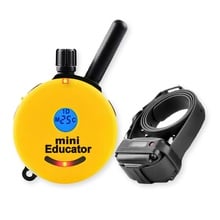
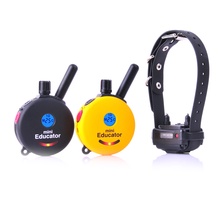
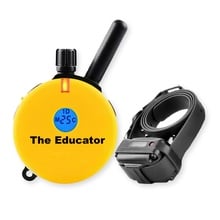
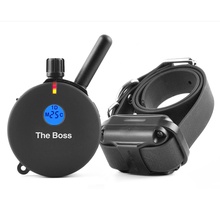
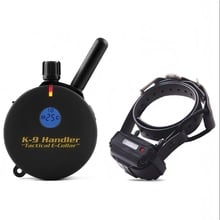
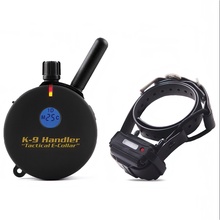
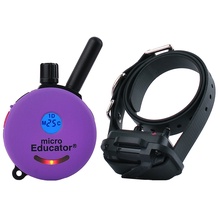
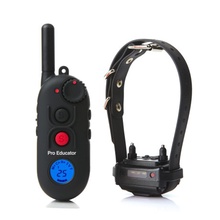
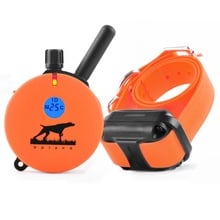
E-Collar Technologies electronic training collars are organized around stimulation precision and vibration capability — the two features that define the brand and the reason handlers who train with a lot of nuance in their program choose them over collars that move in larger steps. They connect to the full E-Collar Technologies lineup and sit within the broader electric dog training and GPS collar category. The ET-300 Mini Educator is the close-working collar at a half mile — compact transmitter, fine-tune stimulation control, vibration-only mode for handlers who want a non-static communication option during close-in steadiness work or with dogs that are sensitive to stimulation. The ET-400 Educator steps the range and capability up while keeping the same precision control layout for handlers whose dogs range past the 300's limits. The ET-800 Boss is the mid-range option — the same fine-tune control on a platform built for dogs that work harder cover and longer sessions. The UL-1200 Upland Hunter reaches a mile and is specifically built around the demands of upland gun dog work — the collar a serious pointing dog handler reaches for when range and stimulation precision both matter on the same setup. The K9 Handler Trainer is the professional configuration — a mile of range, purpose-built for handlers who are running dogs through structured programs where consistent timing and level control across multiple dogs and multiple sessions defines the work. Both single and two-dog configurations are available across the lineup. Questions about which E-Collar Technologies collar fits your dogs and training program? Call us at 800-338-3647.
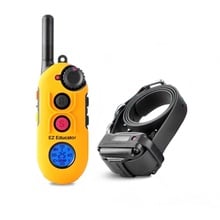
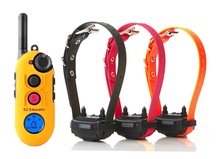
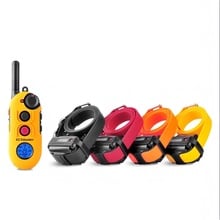
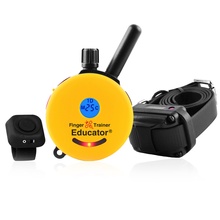
Choosing range, control style, and dog capacity
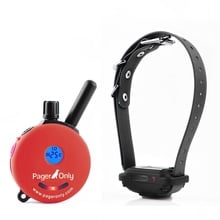
Start by sizing the remote trainer range to the ground you cover; upland edges and big water setups demand more reach than close-in obedience work. Control style is the next decision: page-only vibration fits handling and attention cues, while correction is for reinforcing commands a dog already understands. If you rotate dogs through training, a bungee collar can help keep fit consistent when dogs hit the end of the lead or turn hard. For kennel strings or training partners, 3-dog and 4-dog systems keep one transmitter working across multiple collars without juggling gear.
Electronic collar questions handlers ask
What is a remote dog trainer used for?
A remote dog trainer is used to reinforce known commands at a distance with consistent timing. A remote dog trainer can deliver correction or vibration cues when a leash or check cord isn’t practical.
What’s the difference between correction and page-only vibration?
Correction delivers a training stimulus intended to enforce compliance with a known command. Page-only vibration provides a non-correction cue for attention, handling, or recall patterns.
When should I choose a 3-dog or 4-dog remote dog trainer?
A 3-dog remote dog trainer or 4-dog remote dog trainer makes sense when you run multiple dogs in training and want one transmitter. A multi-dog setup helps keep timing consistent without swapping equipment between dogs.
How do I pick the right range for an upland hunting dog remote trainer?
An upland hunting dog remote trainer range should match the farthest distance you realistically handle a dog in cover and on turns. An upland hunting dog remote trainer with more range helps when terrain, vegetation, and wind spread dogs out.
What is a vibration remote trainer for?
A vibration remote trainer is for giving a clear attention cue when you want the dog to check in or take a cast. A vibration remote trainer is also useful when you want a page-style signal without applying correction.
What does “double transmitters” mean on an e-collar setup?
Double transmitters means a setup comes with two remotes that can control the same collar system. Double transmitters are useful when a handler and a training partner both need access to the controls.