
Steady to Wing and Shot: Adding the Gun
Thursday, August 6th 2026
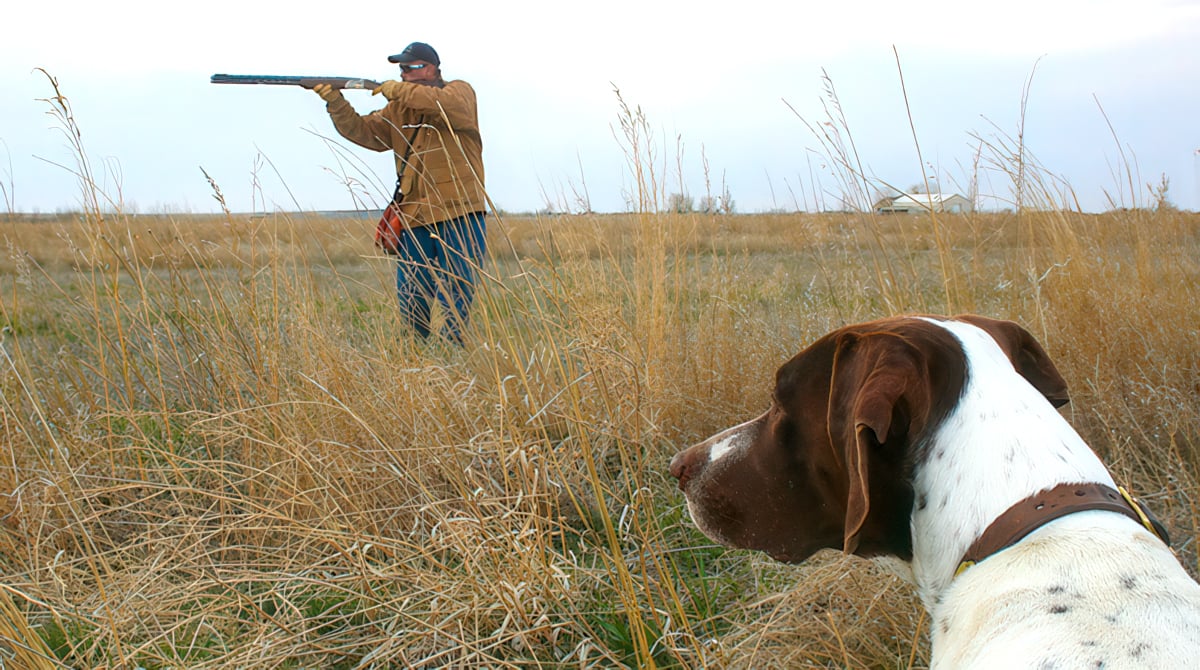
Holding through a flush is real progress. Holding through the flush and the shot that follows is what a hunter can actually build a season around. Most young pointing dogs get pushed too fast in between, asked to handle gunfire before the hold underneath it is ready. It's the last real test before a dog is finished.
From Wing to Wing and Shot
If you worked through the earlier stages of this series, your dog is already holding through a helper-triggered flush and standing firm when a bird gets up on its own. Steady to wing and shot adds one more variable: a gunshot at the moment the bird is in the air. It sounds like a small addition. To a dog that's never heard gunfire paired with a bird it's pointing, it can be enough to undo a hold that was rock solid the day before.
What Should Already Be in Place
Your dog needs to be reliably steady to wing before gunfire enters the picture at all: holding through a flush your helper triggers, holding when a bird gets up unpredictably, holding at real field distance. If you haven't proofed that stage yet, go back to Steadying a Bird Dog and Honoring before adding a gunshot on top. Gunfire introduction from a distance, covered in Introducing a Puppy to Birds, should already be behind your dog too. This stage assumes the dog has heard a blank pistol before and didn't react to it from far off. Now the job is closing that distance while the dog is actually holding a point.
Building the Skill
Starting Distance
Set your dog up on a planted bird, let it point, and have a helper flush while you hold the dog steady, the same setup from earlier stages. This time, have a second helper fire a blank pistol at real distance, 100 yards or more, at the moment of the flush. Dogs Unlimited's blank pistols and accessories selection covers both ends of the ignition system: the Charter Arms PRO series in .22 or 209 configurations for handlers who want a standard reliable revolver, and the Traditions 209 primer pistol as a lower-cost entry point. Either works for this stage. What matters is starting far enough out that the dog doesn't react at all.
Closing the Distance
Once the dog holds without hesitation at your starting distance across several sessions, close the gap in small steps, not one big jump. If the dog breaks at any point, back the distance out to the last point it held reliably and rebuild from there before trying to close in again. This stage rewards patience over progress. A dog that takes six weeks to get comfortable with the gun at fifteen yards is in far better shape than one that got there in a week and breaks half the time.
Protecting Your Hearing
Blank pistols are loud at close range, and you'll be firing a lot of reps over the course of this stage. Banded hearing protectors rest around your neck between shots so they're actually there when you need them, with a spare set of earplugs included. This is protection for you and your helper, not the dog. Cumulative exposure across dozens of training sessions adds up, and there's no good reason to skip it.
Reinforcing with the E-Collar
An e-collar system still has a role here, the same way it did in steadying and honoring work: reinforcing a hold the dog already understands, not teaching a new one. If your earlier work moved the receiver off the neck by running the same collar strap around the dog's belly instead, keep that same setup through gun introduction. The dog has already learned to associate that spot, not the neck, with a correction, and switching it back now would be starting the association over.
Common Mistakes
Moving from blank pistol straight to shotgun is a common shortcut that costs people months. A shotgun is louder, and the motion of shouldering and firing it is a different picture than a handgun at a fixed distance. Prove the dog steady to the pistol up close before ever bringing a shotgun into a training session. The other common mistake is closing distance on a schedule instead of on the dog's actual performance. If a dog is still hesitating at fifty yards, moving to thirty yards next week because that's what the plan called for is how steadiness gets undone right before a season that was supposed to prove it.
Frequently Asked Questions
What is the difference between steady to wing and steady to wing and shot?
Steady to wing means a dog holds when a bird flushes. Steady to wing and shot means the dog holds through the flush and the gunshot that follows, without breaking at the report.
When should I add gunfire to a dog that's already steady to wing?
Only once the dog is reliably holding through a flush with no hesitation. Adding gunfire to a dog that's still inconsistent on the flush alone stacks a new variable on top of one that isn't solid yet.
How far away should the gun start?
Far enough that the dog doesn't react at all, often 100 yards or more for a dog's first exposure to gunfire around a hold. The distance closes gradually over multiple sessions, not in a single afternoon.
My dog holds through the flush but breaks at the shot. What now?
Move the gun back out to a distance where the dog held reliably, and close the gap more slowly this time. Breaking at the shot after holding for the flush usually means the last jump in distance was too big.
Should I use a blank pistol or my hunting shotgun for this stage?
A blank pistol at distance, closing gradually. Save the actual shotgun for once the dog is already steady to a blank pistol fired close by, since a shotgun report is louder and the recoil movement is a different picture for the dog than a handgun.
Does the e-collar placement matter for this stage?
If earlier steadying and honoring work moved the receiver off the neck by running the same collar strap around the dog's belly instead, keep that same setup through gun introduction. The dog already associates that spot with a correction, and switching it back would mean starting the association over.
Do I need hearing protection for this training?
Yes, for the handler and anyone helping. Repeated close-range blank pistol fire over many sessions adds up, and banded hearing protectors are inexpensive enough that there's no reason to skip them.
Related Resources
As always, our goal here at Dogs Unlimited is to help you Make Your Good Dog Better, steady through the flush and steady through the shot.