
E-Collar Conditioning: Introducing the Collar the Right Way
Thursday, September 3rd 2026
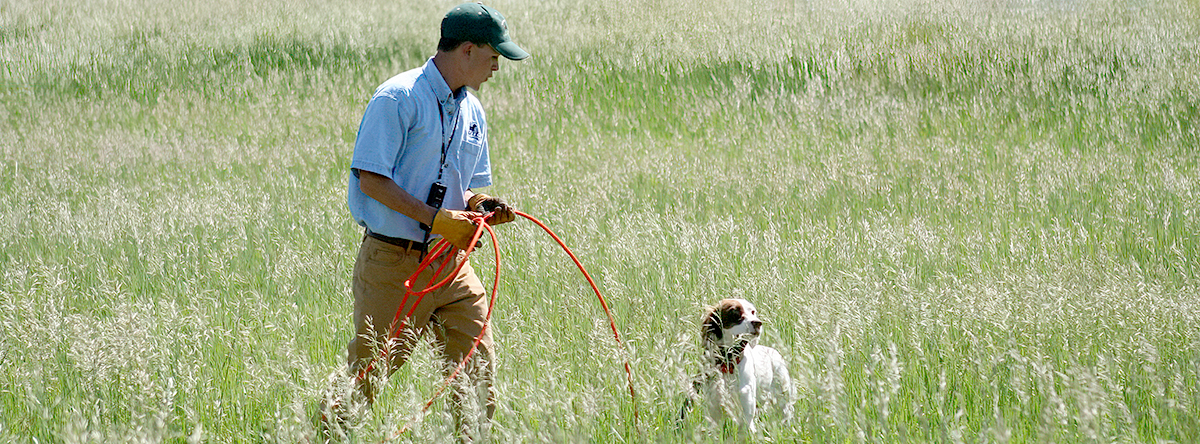
Most e-collars don't fail because of the equipment. They fail because of the first few sessions after the box gets opened. A dog that meets stimulation for the first time with no warning and nothing familiar to connect it to learns exactly one thing: the collar is unpredictable. A dog conditioned properly learns something else entirely, that a light stim is just a quieter version of a command it already knows how to answer.
What Conditioning Actually Means
Conditioning is the process of teaching a dog what stimulation means before it ever matters in the field. Done correctly, a light stim becomes tied to a command the dog already understands, the same way a leash pop or a verbal correction would be, just with more range. Done poorly, or skipped entirely, a dog experiences stimulation as random and unconnected to its own behavior, which produces confusion or avoidance instead of reliability.
Before the Collar Ever Goes On
An e-collar reinforces a command a dog already knows. It doesn't teach a new one. That rule runs through every post in this series, from whoa work in the yard to a whistle sit at distance, and it applies just as much here. If the underlying command isn't solid yet, introducing the collar won't fix that. It will only teach the dog that stimulation happens for reasons it can't identify, which is the opposite of what conditioning is supposed to build.
The First Fitting
Before any power is involved, let the dog wear the collar during something it already enjoys: a meal, a walk, a few minutes of play. The goal at this stage is purely physical, a dog that's comfortable with the weight and fit of the receiver before it's ever associated with anything else.
Placement matters as much as timing. The receiver belongs high on the neck, in the upper third rather than down near the chest, and to the side rather than centered over the trachea. That side position isn't arbitrary. It sits over more muscle and flatter skin, which keeps the contact points seated reliably instead of sliding as the dog moves, and it keeps the unit off the windpipe entirely. A collar that rides low or sits dead center over the throat tends to slip forward when the dog lowers its head, and a receiver that's slipped means the contact points aren't touching skin, which means the dog isn't feeling anything at all no matter what level you dial in. Check the fit the way you would any training collar: snug enough that the contact points stay against the skin, loose enough to fit two fingers underneath comfortably. Move the receiver's exact spot every couple of hours during long wear, and never leave it on for more than 8 to 10 hours in a day.
Finding the Working Level
Do this in a quiet place with nothing else going on, the dog calm and settled rather than excited, tired, or keyed up about something else in the environment. An aroused or distracted dog masks the exact response you're trying to see, and a genuinely tired one won't give you an honest read either. With the collar fitted and the dog simply standing or sitting calmly next to you, start at zero and raise the level one setting at a time, watching for the faintest response: an ear flick, a slight head turn, a brief shift in attention toward you. That's the working level. It's usually lower than new handlers expect, and it has nothing to do with correcting behavior yet. This step is purely about finding the level a dog can actually feel, done separately from any command, before the two ever get paired together.
Pairing Stimulation With a Known Command
Once the working level is found, pair a light stim with a command the dog already performs reliably, at the exact moment you'd expect compliance. This is where the collar stops being a new, unexplained sensation and starts being a variation on something the dog already understands. Keep sessions short. A dog that's still building this association doesn't need a long session, it needs a clean one.
Timing is the part that actually makes this work, and it runs the opposite direction from what feels intuitive. The stim isn't a reward for good behavior, it's mild pressure, so it never gets applied to a dog that's already complying. Give the command the dog already knows, and if it doesn't respond, apply the stim at the working level right along with a repeat of the command, then release the stim the instant the dog complies. The dog learns that the command itself is the way to make the pressure stop, which is what actually builds a faster, more reliable response over time. Stim a dog that's already sitting or already holding and you're not confirming anything. You're teaching it that doing the right thing doesn't necessarily stop the pressure, which undoes the entire point of conditioning.
A simple version of this: give a dog that already sits reliably the verbal cue. If it sits, nothing happens with the collar at all, just genuine praise. If it doesn't, repeat the command while applying the stim at the working level, and release the stim the moment it sits, followed by the same praise. Repeat this only a handful of times per session, and expect fewer and fewer stims as the dog starts sitting on the command alone to avoid the pressure entirely. Once that's solid at close range with the dog watching the handler directly, start adding distance and distraction gradually, the same way the underlying command itself was built. The stim should show up less often as training progresses, not more. A collar that fires on every single repetition regardless of compliance isn't conditioning anything. It's just noise.
Pointing Breeds: Reinforcing the Hold
The hold, here, is whoa itself: a pointing breed stopped and staying stopped, whether that's holding a point on birds, standing steady through a flush, or backing another dog's point. For pointing breeds, conditioning centers on this command, covered in depth in Steadying a Bird Dog and Honoring. The collar reinforces a hold the dog already gives reliably on the check cord and the whoa hitch, first in the yard, then around birds, then around another dog's point.
Neck placement is standard for most dogs and most disciplines, and it works because it's where a dog has felt correction and pressure its whole life, on a leash, on a flat collar, on a check cord clipped to its collar. For a pointing breed whose whoa work started on a whoa hitch, though, that history is different. The whoa hitch wraps around the belly, not the neck, so the dog's early association with holding still was built around pressure on its body, not its throat. Some pointing breed trainers move the e-collar receiver to a belly band for this reason, so the stim lands in the same place the dog already associates with stopping and holding, rather than asking it to transfer that lesson to a new location on its body.
There's a second reason experienced trainers give for the belly placement specifically around birds. A correction that comes from the belly, from behind and below the dog rather than from the direction of the handler or the bird itself, is less likely to get tangled up with either one in the dog's mind. The goal is a dog that understands whoa means stop, not a dog that starts to associate birds, or the handler, with discomfort. Some trainers run two collars during this stage for exactly that reason: the belly collar reinforces whoa around birds, while a separate neck collar reinforces turn and recall commands during drills where no bird is present. Once whoa is thoroughly established, some trainers move that reinforcement to the neck collar as well, having already built the association they needed through the belly. Neither approach is mandatory. It's a refinement built around keeping a dog's desire for birds completely separate from the mechanics of holding still.
Retrievers and Flushers: Reinforcing the Stop
Retrievers and flushing breeds condition around a different foundation command, though the process is identical underneath. A retriever's collar work ties to the whistle sit covered in Handling and Blind Retrieves. That sit has to be reliable as a foundation before any cast training begins, but it doesn't stop being used once casting starts. On an actual blind, the sit whistle is what stops a dog that's already running, mid-cast, so the handler can give it new direction. It's used throughout a blind, not just before the first one is ever given. Flushing breeds, English Springer Spaniels and Boykin Spaniels among them, condition around hup, the traditional stop command that keeps a flushing dog from ranging past gun range or busting a bird wild. Different command, same underlying principle: the collar reinforces a stop the dog already knows, at the range where a whistle or a voice alone starts to lose reliability.
| Discipline | Command Reinforced | Typical Placement |
|---|---|---|
| Pointing breeds | Whoa, holding a point | Neck standard, belly band around birds to keep whoa corrections separate from bird association |
| Retrievers | Whistle sit, before cast training begins and to stop a dog mid-run for redirection | Neck standard |
| Flushing breeds | Hup, stopping the flush | Neck standard |
Common Mistakes
Starting at too high a level is the one that does the most damage, since a dog's first real experience of the collar becomes something closer to a shock than a cue, and every session after that has to work around the dog's guardedness instead of building on a clean start. Skipping the working-level search entirely and just guessing at a setting runs a close second, usually landing too high for the same reason. And using the collar for the first time during an actual field correction, rather than in a controlled session beforehand, teaches a dog that the collar shows up unpredictably instead of meaning something specific.
Frequently Asked Questions
What does it mean to condition a dog to an e-collar?
Conditioning means teaching a dog what the stimulation means before it's ever used to correct anything. Done right, a dog learns that a light stim is tied to a command it already knows, not a punishment that comes out of nowhere.
What level should I start at when introducing an e-collar?
The lowest level the dog can actually perceive, often lower than most new handlers expect. Test it in a quiet setting with the dog calm and settled, not excited or distracted, since an aroused dog masks the subtle response you're looking for. Start at zero and raise it one setting at a time until you see the faintest response, an ear flick or a slight pause, not a flinch or a yelp.
Does my dog need to know commands before I introduce the collar?
Yes. An e-collar reinforces a command a dog already understands. It doesn't teach a new one. Introducing the collar before the underlying command is solid just teaches a dog that stimulation is random and unconnected to anything it can control.
Is e-collar conditioning different for pointing breeds and retrievers?
The conditioning process itself is the same. What differs is which command gets reinforced first and where the dog is typically working when it happens. Pointing breeds are conditioned around whoa and holding a point. Retrievers and flushers are conditioned around a whistle sit and steadiness to the flush.
Where should the collar receiver sit on the dog?
Standard placement is on the neck, snug enough that the contact points stay against the skin without shifting, and it works because that's where a dog has felt pressure and correction its whole life. Some pointing breed trainers move the receiver to a belly band instead, since whoa work often starts on a whoa hitch that wraps around the belly. A correction from the belly also comes from behind and below the dog rather than from the direction of the bird or the handler, which helps keep whoa corrections from getting tangled up with the dog's desire for birds. Some trainers even run two collars during this stage, belly for whoa around birds and neck for turn and recall during bird-free drills.
Exactly where on the neck should the receiver go?
High on the neck, in the upper third rather than down near the chest, and to the side rather than centered over the trachea. That spot sits over more muscle and flatter skin, which keeps the contact points seated against the skin instead of sliding when the dog moves or lowers its head, and it keeps the unit off the windpipe entirely.
Can I use the collar the first time my dog breaks a command?
No. The collar's first association with a dog should never be an unplanned correction. Build the working level and the command pairing in low-pressure sessions first, so the dog already understands the collar before it's ever used to correct a real mistake.
How long does e-collar conditioning take?
It varies by dog, but most conditioning programs run several weeks of short sessions rather than a single afternoon. Rushing the process is the most common reason a dog ends up collar-shy instead of collar-conditioned.
Are there other times a retriever or flushing dog needs to sit?
Several. A dog sits at the line while marks are thrown, before it's ever sent. It's trained to sit and hold a retrieved bird rather than drop it, staying seated until the handler takes it to hand. And it sits to honor, staying quietly off to the side while a different dog runs a mark or a blind. All three lean on the same sit the dog already knows, the same way casting and blind work do.
Are there other times a pointing breed needs to whoa?
Yes. Beyond holding a point, staying steady to wing and shot, and honoring another dog's point, whoa also works as a general stop-and-stay command with nothing to do with birds at all: a hazard in the field, a distraction the dog shouldn't chase, or any moment a handler needs the dog to stop and hold immediately. It's the same command doing a broader job, not a separate one.
Related Resources
As always, our goal here at Dogs Unlimited is to help you Make Your Good Dog Better, starting with a collar the dog already trusts before it ever needs to.