
Handling and Blind Retrieves
Thursday, August 27th 2026
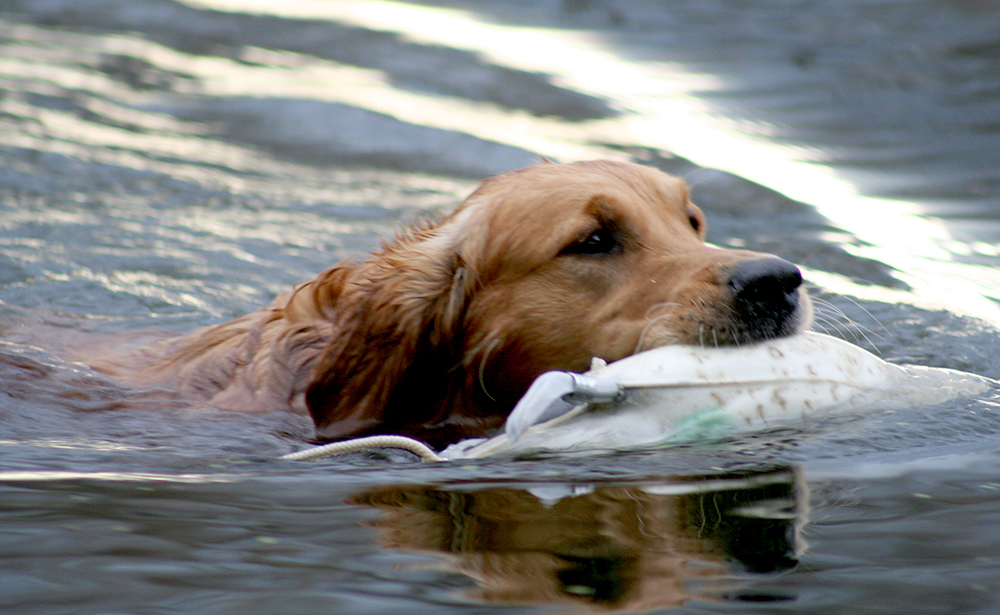
A duck goes down behind a rise, out of the dog's line of sight the whole way down. No mark, no memory, nothing for the dog to run to on its own. This is where a good nose and a strong desire to retrieve stop being enough. The dog needs to trust a person standing on a bank a hundred yards away more than it trusts its own read of the field. That trust is what handling actually is, and it's built long before the day it gets tested on a real bird.
What a Blind Retrieve Actually Is
Marking, covered in Marking and Memory, runs on a dog's own visual memory of a fall it watched happen. A blind retrieve removes that memory entirely. The dog never saw the bird go down. It has no picture to run to and no reason to trust one direction over another, so the entire retrieve depends on the handler reading the field correctly and directing the dog there piece by piece. Marking is the dog's job. Handling is the handler's job, with the dog as the instrument.
The Whistle Commands That Make Handling Possible
Handling runs on two tools: a whistle to stop the dog, and hand signals to redirect it once it's stopped. A training whistle carries further and cuts through wind and distance better than a voice command ever will, which matters once a dog is working well out past normal talking range.
The signals themselves are simple by design, and it helps to actually picture each one before trying to teach it. For an over, the handler raises the arm on the side they want the dog to go and extends it straight out to the side, roughly shoulder height, pointing in the direction of travel, left arm for a left cast, right arm for a right cast. For a back, the handler raises one arm straight up overhead, like signaling touchdown, which sends the dog away in a straight line rather than to either side. For come-in or hunt-close, both arms come down and sweep in toward the body, the motion a person makes waving someone closer, which pulls the dog in tighter instead of sending it further out. Every one of these happens only after the whistle has already stopped the dog and it's watching the handler, never before.
Simple is the point. A dog reading a signal at a hundred yards needs something unmistakable, not something subtle.
Building the Sit Whistle First
None of the casting matters if the dog won't stop. The sit whistle, one sharp toot that means stop and look at the handler immediately, has to be reliable before anything else gets layered on top of it. Build it the same way whoa got built earlier in this series: short sessions, close range, a dog that already understands sit from basic obedience, and repetition until the response is automatic rather than considered. Once it holds up close, stretch the distance. A dog that sits reliably at ten feet and falls apart at eighty yards doesn't have the skill yet, it has a shorter version of it.
A system like the Garmin Sport PRO reinforces a whistle sit at real distance the same way it reinforced whoa for a pointing breed: a light stim at the exact moment of the whistle, backing up a command the dog already understands rather than teaching it from scratch. Introduce it only once the whistle sit is already solid up close. The collar's job is to make a known command hold up at distance, not to explain the command in the first place.
Teaching the Casts
Over
An over sends a dog left or right. Start close, with a pile of bumpers set out to one side, whistle the dog to a sit, then give the arm signal toward the pile while stepping slightly in that direction. The step matters early on. It gives the dog a second, larger cue to follow while it's still learning what the arm alone means. Fade the step out once the dog is responding to the arm on its own.
Back
A back sends a dog straight away from the handler. This is usually the hardest cast to teach, since it asks a dog to run away from the handler with no bumper visible ahead of it, on faith that something is actually out there. Build it with a visible pile first, arm raised straight overhead, then gradually work toward blind setups where the dog is trusting the signal with nothing to see.
Come-In and Hunt-Close
Both arms brought down and toward the body call a dog in closer, either because it's drifted too wide of the actual fall or because the moment calls for a tighter hunt instead of a long cast. This signal gets used constantly on a real blind, correcting a dog's line in small increments rather than large redirections.
The T Drill
Most handling programs build casts using a T drill: three piles of bumpers set out at the same distance from the handler, one straight ahead and one placed left and right of it, so the three piles form the top of a T with the handler standing at the base. Send the dog to the straight pile first with a back, then work the sides with overs, always starting from a setup the dog can see so the cast and the outcome connect clearly in its mind. Once all three directions are solid with visible bumpers, start removing them one at a time until the dog is taking casts on faith the same way it eventually will on a real blind.
Putting It Together on a Blind
A real blind retrieve is just the whistle sit and the casts, run in sequence, at a distance and with cover the dog hasn't seen mapped out in a drill. Start short and open, somewhere the dog can basically see the whole field, and work up to longer blinds with real obstacles, a ditch, a treeline, a change in cover, that force multiple casts to navigate around. Walk the dog up to the line calmly before every blind. A dog that arrives at the line already amped up handles worse than one that arrives settled.
Common Mistakes
Rushing past the sit whistle causes more problems than anything else here. A dog that mostly stops, most of the time, doesn't have a sit whistle yet, and every cast built on top of a shaky stop inherits that shakiness. Inconsistent body language does nearly as much damage: dogs read posture and foot position as closely as the arm signal itself, and a handler who's sloppy about where their feet are pointing sends mixed signals without realizing it. And skipping the visible stage of the T drill to jump straight into blind casts asks a dog to trust a signal it's never actually seen pay off yet.
For Versatile Pointing Breeds Too
Handling isn't exclusive to Labradors. German Shorthaired Pointers, German Wirehaired Pointers, Wirehaired Pointing Griffons, Vizslas, Pudelpointers, and Weimaraners doing retriever work, especially in hunt tests where blind retrieves are a standard element, need the same whistle sit and cast system. The training doesn't change breed to breed. What changes is everything this system gets layered on top of: the pointing, honoring, and steadiness work already covered elsewhere in this series.
Recommended Training Videos
Watching handling actually run, cast by cast, fills in gaps a written description can't. Duck Dog Basics 2 covers basic handling and water honesty directly, the same ground covered in this post. Duck Dog Basics 3 picks up from there with advanced handling and pattern blind work, the natural next step once the fundamentals here are solid. Chris Akin, who leads both, is explicit that Basics 3 assumes the groundwork from Basics 2 is already in place, so watch them in order rather than jumping straight to the advanced material.
If you haven't already covered the earlier stages of this series, Duck Dog Basics and Training Your Retriever both cover the puppy-through-marking foundation this post assumes, the same ground as Retrieving Dummies and Bumpers and Marking and Memory earlier in this series.
Frequently Asked Questions
What is a blind retrieve?
A blind retrieve is a retrieve of a bird or dummy the dog never saw fall. The dog has no memory of it to work from, so the handler directs the dog to the spot using a whistle and hand signals instead.
What's the difference between handling and marking?
Marking is memory. The dog watched the fall and runs there on its own. Handling is direction. The dog stops on command, watches the handler, and takes a cast toward a spot it never saw, trusting the handler's read of the field over its own.
What should I teach first, the sit whistle or the casts?
The sit whistle, and it needs to be reliable before casting ever enters the picture. A dog that won't stop on the whistle has nothing to cast, since a cast only means something once the dog has actually stopped and is looking to the handler for the next instruction.
What are the basic hand signals for handling a retriever?
Over, the arm on the desired side raised straight out to shoulder height, pointing left or right for that cast. Back, one arm raised straight overhead, like signaling touchdown, for a straight cast away from the handler. Come-in or hunt-close, both arms brought down and swept in toward the body, for a dog that's drifted too far or needs to work a tighter area. All three are given only after the whistle has already stopped the dog.
What is the T drill?
The T drill uses three piles of bumpers set out at the same distance from the handler, one straight ahead and one left and right of it, so the piles form the top of a T with the handler at the base. It's the standard setup for teaching a dog to take an over, back, or straight cast on command in a controlled setting before any of it gets tested on a real blind.
Why does my dog take the wrong cast?
Usually one of two reasons: the whistle sit isn't fully reliable, so the dog is still moving or anticipating when the cast is given, or the handler's own body position is sending a different signal than intended. Dogs read posture and foot position closely, often more closely than the arm signal itself.
Do versatile pointing breeds need handling training too?
Yes, especially those doing retriever work in hunt tests, where blind retrieves are a standard test element. The same whistle sit and cast system used for a Labrador works the same way for a versatile breed handling a blind on land or water.
Related Resources
As always, our goal here at Dogs Unlimited is to help you Make Your Good Dog Better, one cast at a time.