
Marking and Memory: Teaching a Retriever to Mark a Fall
Tuesday, August 25th 2026
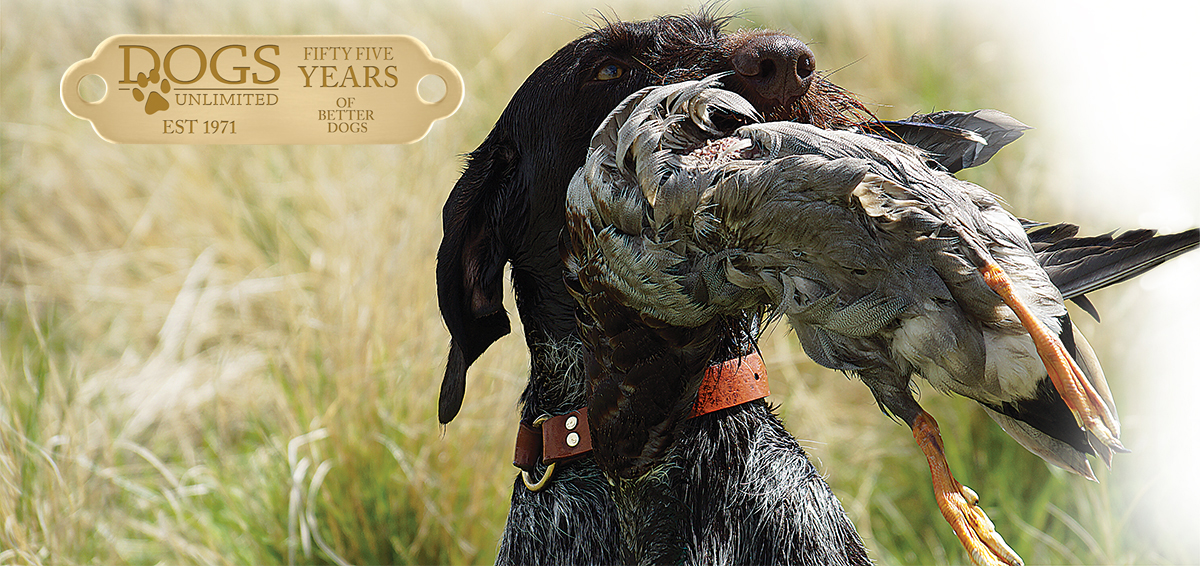
A bird folds in the air, drops into heavy cover, and disappears from the dog's sight the moment it lands. A dog that marks well is already running a straight line to a spot it never actually saw the bird land in, working off the last half-second of visual information before the fall was hidden. That's marking. It looks instinctive. It's built.
What Marking Actually Is
A single mark is the simplest version: one bird down, one retrieve, nothing else competing for the dog's attention. A multiple mark asks a dog to watch two or more falls and retrieve them in order, usually last down, first retrieved. A memory bird is the hardest of the three, requiring a dog to hold an earlier fall in mind while it runs a more recent one first. All three assume the same foundation underneath them: a dog that already holds, carries, and delivers cleanly, the groundwork covered in Retrieving Dummies and Bumpers.
Why a Launcher Changes the Picture
A hand throw is never quite the same twice. Distance drifts, arc changes, and a tired arm at the end of a long session throws differently than a fresh one at the start. None of that helps a dog learn to trust its own read of a fall. A launcher throws the same mark the same way, every time, which is what actually builds reliable marking instead of just repetition for its own sake.
Zinger Winger II
The Zinger Winger II is the launcher most retriever trainers reach for first. At 13 pounds it throws a duck 20 yards and a bumper or Dokken 30 yards, with a high, honest arc that gives a dog real time to mark the fall. The Sure-Shot release fires a primer the instant the mark launches, so the dog learns to mark to the sound as much as the sight, exactly what happens on a real hunt when the shot draws attention before the bird is fully visible. It pairs with a Dogtra or Tri-Tronics remote releaser, which matters most for one specific reason: training alone.
Mini Zinger
The Mini Zinger trades some throwing distance, a 15-yard duck throw, for size. At 12 pounds and built to store and transport in tight spaces, it's the better fit for a trainer working out of a smaller vehicle or a yard with less room to work with. It also fires a wider range of blanks than the Winger II, 209, .22, or .32 caliber, giving you a louder, more field-trial-realistic report if you want one. It runs the same Dogtra or Tri-Tronics remote setup as the Winger II, so the training picture doesn't change, only the footprint does.
Field Trialer
The Field Trialer is the original Zinger Winger, and it throws noticeably farther than the Winger II: a duck out to 25 yards, a bumper or pigeon to 40, a Dokken to 35. At 15 pounds it's still manageable for one person to set up and transport, and like the Mini Zinger it fires 209, .22, or .32 caliber blanks, giving you the option of a louder report as a dog advances. This is the step up once a dog has outgrown the marks a Winger II can produce.
Hunt Tester
The Hunt Tester is the largest launcher in the lineup, at 17 pounds and 69 inches tall, and it throws farther than anything else here: a duck to 40 yards, a bumper or pigeon to 50, a Dokken to 45. It exists for a specific reason, producing marks that match what a dog will actually see at a real Hunt Test or Field Trial. Most dogs don't need this launcher early in their marking work. It's built for a dog that's already advanced and a trainer who's training toward competition, not for building the fundamentals covered earlier in this post.
| Launcher | Weight | Throw Distance | Best For |
|---|---|---|---|
| Zinger Winger II | 13 lbs | Duck: 20 yds, Bumper/Dokken: 30 yds | All-around solo training, the standard first launcher |
| Mini Zinger | 12 lbs | Duck: 15 yds, Bumper: 25 yds | Tight storage, smaller vehicles, limited yard space |
| Field Trialer | 15 lbs | Duck: 25 yds, Bumper: 40 yds, Dokken: 35 yds | A dog that's outgrown the Winger II's distance |
| Hunt Tester | 17 lbs | Duck: 40 yds, Bumper: 50 yds, Dokken: 45 yds | Competition-level marks for advanced dogs |
Setting Up the Field
Wind matters as much as launcher placement, but not for the reason it's easy to assume. If the dog is picking up scent from the fall before it's ever sent, wind isn't helping the drill, it's undermining it: the dog isn't marking anymore, it's smelling its way to a known scent cone, and you've lost the ability to tell whether it actually watched and remembered the fall. Set up so scent isn't reaching the dog at the line during the throw. Wind becomes useful help later, once the dog is already closing in on the area it marked, not before it's even been sent. Place the launcher where the fall will be visible against clear ground or sky, not lost against brush or shadow, especially in early sessions when a dog is still learning to trust what it saw. As marking gets more advanced, cover and harder backgrounds become part of the challenge, but they don't belong in the first sessions.
Building Single Marks
Start with one launcher, one throw, and nothing else happening. Consistency matters more than difficulty at this stage: keep the distance, cover, and setup the same, and run it enough times that the dog is confidently running a tight, direct line to the fall instead of casting around a wide area once it gets there. A little nosing around right at the fall is normal, that's the dog closing the last few feet on scent. Wide searching is the sign a mark wasn't really there yet. Vary the direction and distance once single marks are solid, but change one variable at a time. A dog that's still building confidence doesn't need every session to look different.
Adding Multiple Marks and Memory
Once single marks are reliable, add a second launcher and throw two marks in sequence, sending the dog for the more recent fall first. Memory was already doing the work on a single mark. Doubles add something new: holding two locations at once and sorting out which one to run first. Memory birds take it further still: a fall thrown early in a sequence, held in the dog's mind through one or more other retrieves, then run last. This is advanced work, and it's built slowly, not introduced all at once on a dog that just became reliable on doubles.
Land Marks and Water Marks
Everything above applies on land, but a retriever also needs to mark on water, and the two aren't the same skill wearing different scenery. A fall on water drifts with current and wind after it lands, so the spot a dog marked isn't necessarily the spot it needs to swim to by the time it gets there. Water marking gets its own progression, usually starting once land marks are solid, since a dog that hasn't learned to trust its mark on solid ground has little chance of holding that same discipline while swimming.
Scent works against a dog on water in a way it doesn't on land. On solid ground, a dog that marks a fall within a reasonable radius can close the last few feet on scent, the safety net covered earlier in this post. That net is much thinner on water. Scent doesn't hang over open water the way it does in grass or cover, current keeps moving whatever the dog is hunting for, and a swimming dog's nose is working low, close to the surface, with none of the ground-level scent pooling it would get on land. A dog that marked well on land but never had to rely purely on the mark itself, because scent quietly bailed it out at the end, will struggle the first time water takes that safety net away.
Entry matters as much as the mark itself. A dog that hesitates, angles down the bank looking for an easier way in, or enters at a different point than a straight line to the fall has already lost ground before it starts swimming. That's built the same way steadiness was built earlier in this series: repetition on a clean, confident entry before distance or current ever get added to the picture. Since every launcher covered above throws ducks along with everything else, the same equipment doubles as water-marking gear once it's set up along a shoreline instead of a field, no separate system required.
Current adds one more layer once entry and land marks are both solid. A dog swimming a straight line to where a bird landed will often end up short of it, since the bird has drifted with the current in the time it took the dog to get there. Experienced water dogs learn to read that drift and adjust their line accordingly, but that's a refinement for later, not something to load onto a dog that's still learning to trust a water mark in the first place.
Common Mistakes
Impatience causes more setbacks here than anything else. A handful of good singles in a row feels like readiness, but it isn't the same as a pattern a dog can rely on under pressure, and moving to doubles or memory birds too soon on that assumption is the most common misstep. Never varying the picture runs a close second: the same field, distance, and bird every session teaches a dog that one picture, not the underlying skill, and it struggles the first time a real hunt looks different. Skipping the setup work covered above, launching into a headwind or placing a mark against a background that swallows it visually, sets a dog up to fail at something it was never given a fair chance to see, then gets blamed for the miss. And moving to water before entry and land marks are both solid asks a dog to swim on a skill it hasn't fully built on dry ground yet.
Frequently Asked Questions
What does it mean for a dog to mark a fall?
Marking means a dog watches a bird or dummy fall and remembers exactly where it landed, then runs a direct line to that spot instead of hunting the whole field. Scent can help a dog close the last few feet once it's already there, but the run itself comes from memory, not the nose. That's why a launcher, which throws the same mark the same way every time, builds this skill better than a hand throw that changes every rep.
Why use a launcher instead of throwing marks by hand?
A hand throw varies every time, in distance, arc, and height, and a tired arm late in a session throws differently than a fresh one. None of that helps a dog learn to trust its own read of a fall. A launcher throws the same mark the same way every time, which is what actually teaches a dog to mark accurately, and it also fires a primer at the moment of release on most models, so the dog learns to mark to the sound as well as the sight.
Which Zinger Winger launcher should I start with?
The Winger II is the standard starting point for most trainers: a 13-pound launcher that throws a duck 20 yards and a bumper or Dokken 30 yards. The Mini Zinger trades distance for size if storage space is tight. The Field Trialer and Hunt Tester throw much farther and exist for dogs that have already outgrown the Winger II, not for building the fundamentals.
What is a memory bird?
A memory bird is a mark thrown early, then held in the dog's mind through a delay before it's run, whether that delay is one or two other retrieves, a walk to a different line, or an unrelated series in between. It's harder than a double because the dog has to hold that first fall in memory through whatever comes next instead of running it immediately, and it's typically introduced only after a dog is fully reliable on multiple marks run back to back.
How many marks should a dog run before adding a second one?
There's no fixed number, but a dog should be running a tight, direct line to the fall consistently, at the distance and cover you're training in, before a second mark enters the picture. A little scent work right at the fall is normal. A dog that's still casting around a wide area once it arrives is telling you the single mark isn't solid yet, and adding a second mark on top of that will only make the problem harder to see and fix.
Does the gunshot matter for marking?
Yes. A dog that's already comfortable with gunfire learns to mark to the sound as well as the sight of the fall, which matters in real hunting conditions where the shot often draws the dog's attention before the bird is fully visible. This is also why most Zinger Winger launchers fire a primer at the instant of release, timing the sound to match the sight the same way a real shot would.
Can I train marking without a launcher?
Yes, with a throwing arm and a training partner willing to be genuinely consistent about distance, arc, and placement rep after rep, which is harder to sustain than it sounds over a full session. A launcher mainly solves two problems: training alone, and producing a more repeatable, honest mark than most hand throws manage late in a session.
Is marking on water different from marking on land?
Yes, in a couple of ways. A fall on water drifts with current and wind after it lands, so the spot a dog marked isn't necessarily where it needs to end up by the time it gets there. Scent also works against a dog on water, since it doesn't hang over open water the way it does in grass, which means the safety net a dog relies on for the last few feet on land is much thinner in the water. Water marking is usually introduced once land marks and a clean, confident entry are both solid, as its own progression.
Related Resources
As always, our goal here at Dogs Unlimited is to help you Make Your Good Dog Better, one clean mark and one solid memory at a time.