
Cody Hunt Gear 3D Releaser Review
Wednesday, September 30th 2026
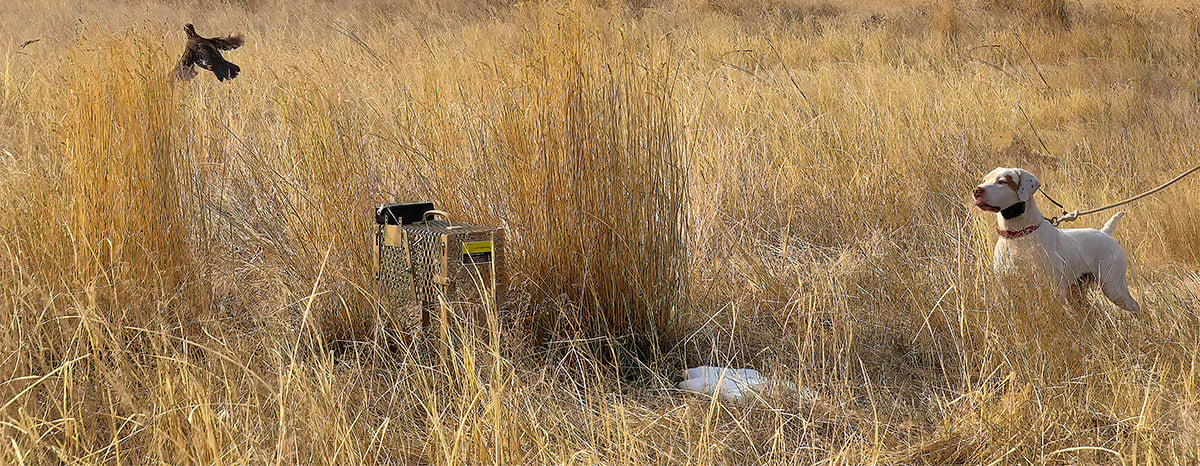
A single bird getting up on command is one kind of training. A whole covey scattering out of the grass at once is another, and it's the one that actually tests a dog against something close to real hunting. The Cody Hunt Gear 3D Upland Bird Releaser is built specifically for that second scenario, and it's worth a closer look at what it actually does well before deciding if it belongs in your training setup.
How the Releaser Is Built
The releaser is made from heavy-duty 3D-printed plastic rather than metal. That trade-off keeps it light without giving up much in the way of durability for repeated outdoor use. Its color also blends into fall and winter grass and cover, and that matters more than it sounds like it would: a releaser a dog can visually pick out before the birds ever move isn't testing the dog's nose the way it should be.
Loading and Capacity
An end door makes loading quick, no reaching into a mechanism to get a bird settled inside. From there, capacity runs from a single pheasant, held without damaging its tail feathers, up to 3 chukars or 4 quail for a genuine covey-style flush, covering pheasant, chukar, and quail training without needing a second, larger unit standing by for bigger birds.
How the Release Works
A bottom trap door opens on trigger and lets birds drop to the ground rather than launching them upward mechanically. From there they scatter or take flight on their own, a closer match to how a real covey actually behaves than a mechanically thrown bird tends to look. It's the same natural-release logic that makes a covey flush unpredictable in the field, built into a training tool on purpose.
This demonstration shows Cody Hunt Gear's earlier aluminum-built releaser. The trap-door release mechanism works the same way on the current 3D-printed plastic version, though the construction shown is the discontinued model.
Triggering It: Electronic or Manual
The releaser comes with its own servo already attached, a Cody Hunt Gear part in its own right, replaceable on its own if it ever wears out. Cody Hunt Gear lists it as compatible with Tri-Tronics, Garmin, SportDog, Dogtra, and DT Systems receivers. Beyond those five, it'll work with most other brands too, as long as the receiver accepts a 3.5mm male mono jack running 4.8 to 6 volts DC. If you'd rather skip electronics entirely, the servo linkage detaches and a simple string takes its place, giving a handler direct, hands-on control instead.
Pros
- Compatible with Tri-Tronics, Garmin, SportDog, Dogtra, and DT Systems receivers directly, plus most others via a standard jack
- Multi-bird capacity supports a real covey-style flush, not just a single bird
- Bottom-door release drops birds naturally instead of launching them mechanically
- Manual string-release option works without any electronics at all
- Servo is a standalone, replaceable part rather than something that takes the whole unit out of service if it wears out
- Made in the USA, backed by a 2-year limited warranty
Cons
- Plastic construction, while durable, won't have the same feel as a metal-built releaser for handlers who prefer that
- Requires a compatible receiver or the manual string setup; it isn't a standalone remote system on its own
Where It Fits in a Training Program
Basic Steadiness, One Bird at a Time
Load a single quail or chukar for straightforward point, flush, and hold work, the foundation everything else builds on. There's no reason to run this releaser at full capacity every session. A young dog still learning to hold through a flush needs the simple version far more often than the complicated one.
A Real Covey Rise
Once steadiness is solid, load 3 chukars or 4 quail and let the dog experience what an actual covey does: several birds up at once, not one bird repeated four times in a row. This is the scenario a single-bird releaser can't touch, and it's the closest a training field gets to the way upland birds actually flush.
Pheasant Work Without Damaging the Bird
The single-pheasant capacity, built specifically not to damage the tail, opens up pheasant-specific training that a lot of releasers built for smaller birds can't handle cleanly. That matters for anyone whose season runs more toward pheasant fields than quail cover.
Layered Scenarios with a Second Releaser
Paired with a Tip-Up, as covered in Bird Launchers for Pointing Dogs, this releaser can provide the first bird in a delayed double flush, or the unscented remote flush in a stop-to-flush drill, with a second bird released from the Tip-Up once the dog holds. A releaser that handles multiple birds and drops them naturally is what makes scenarios like these possible at all.
A Walked Flush for a Finished Dog
The manual string-release option turns this into something closer to real hunting for a dog that's already broke: the handler walks in ahead of the dog and pulls the release by hand, the same motion as flushing a planted bird in the field, with no electronics or remote involved.
Care Between Sessions
Check the loading area and release mechanism for debris after each session, and confirm the servo linkage moves freely if you've switched to manual release at any point. Store it dry between uses. Before reconfiguring it to a different receiver, double check that unit's power supply falls within the 4.8 to 6 volt range this releaser expects.
Frequently Asked Questions
What is the Cody Hunt Gear 3D Upland Bird Releaser made of?
Heavy-duty 3D-printed plastic, built to hold up to repeated outdoor training use.
How many birds can it hold?
One pheasant without damaging its tail, up to 3 chukars, or 4 quail for a covey-style flush.
What electronic collar systems work with this releaser?
Tri-Tronics, Garmin, SportDog, Dogtra, and DT Systems receivers are all listed as compatible. Most other brands will work too, as long as the receiver accepts a 3.5mm male mono jack running 4.8 to 6 volts DC.
Can this releaser be triggered without an electronic collar system?
Yes. Detach the servo linkage and attach a string to the release arm instead, giving a handler manual, hands-on control without any electronics involved.
How do birds come out of the releaser?
Through a bottom trap door that drops them gently to the ground on release, rather than launching them upward mechanically. From there they scatter or flush on their own, closer to how a real covey behaves.
Is this the same releaser as Cody Hunt Gear's aluminum model?
No. This is the newer 3D-printed plastic version, which has replaced Cody Hunt Gear's earlier aluminum-built releaser as the current product.
Related Resources
As always, our goal here at Dogs Unlimited is to help you Make Your Good Dog Better, one covey rise at a time.