
Conditioning Upland Hunting Dogs and Hunters for Peak Field Performance
A practical conditioning guide focused on endurance, agility, scent work, nutrition, and safety—so you and your dog are ready when the season opens.
Introduction
Upland hunting is a time-honored outdoor tradition that requires both skilled hunters and their loyal canine companions to be in exceptional physical and mental condition. The rigorous demands of traversing varied terrain, locating game, and maintaining focus throughout the hunt necessitate thorough preparation. This blog post presents a comprehensive guide outlining the most effective ways to condition both upland hunting dogs and hunters for the challenges of the field.
Understanding the Goal
Before delving into the specifics, it's crucial to grasp the fundamental goal: achieving optimal fitness and readiness. For both dogs and hunters, this translates to enhanced endurance, agility, strength, and mental acuity. The harmony between the two parties is the foundation of a successful upland hunting experience.
Section 1: Conditioning Upland Hunting Dogs
1. Physical Fitness Training
Regular Exercise Routine: Implement a consistent exercise regimen, gradually increasing intensity and duration to enhance endurance. Activities like brisk walks, jogging, and swimming are excellent for building cardiovascular fitness.
Off-Leash Training: Train dogs to respond reliably to commands when off-leash. This skill ensures they stay within safe proximity during hunts and can heed directions promptly.
2. Strength and Agility Development
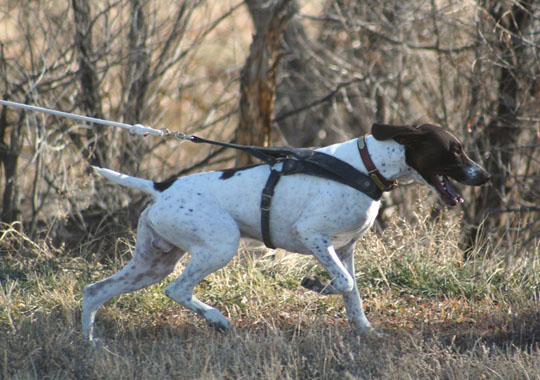
Strength Exercises: Engage dogs in activities that promote core strength and muscle development, such as roading from ATV or horse, water retrieving drills using dummy launchers, and carrying weighted objects.
Agility Training: Set up obstacle courses to challenge dogs' agility, incorporating hurdles, tunnels, and balance beams to simulate real hunting conditions.
3. Scent Detection and Tracking
Scent Training: Enhance dogs' scent detection abilities by using scent trails or hiding scented objects. Gradually increase the complexity of the tasks to mimic real hunting scenarios.
Mock Hunts: Arrange practice hunts to acclimate dogs to diverse terrains and hone their tracking skills using scent trails or decoys.
4. Nutrition and Health
Balanced Diet: Provide a high-quality diet that aligns with dogs' energy requirements and supports muscle maintenance. Consult a veterinarian for breed-specific dietary recommendations.
Hydration: Ensure dogs stay hydrated during training and hunts by carrying water and collapsible bowls like the Mud River Dog Products, Renegade Dog Bowl. Adequate hydration is essential for peak performance.
Section 2: Conditioning Upland Hunters
1. Cardiovascular Fitness
Aerobic Training: Engage in regular aerobic exercises such as jogging, cycling, or swimming to improve cardiovascular endurance. These activities prepare hunters for the prolonged exertion of upland hunting.
2. Strength and Agility Workouts
Full-Body Strength Training: Incorporate compound exercises like squats, deadlifts, and push-ups to build overall strength, which is vital for navigating challenging terrains.
Agility Drills: Perform agility drills like ladder drills and cone drills to enhance agility and responsiveness, crucial for quick movements and adapting to unpredictable conditions.
3. Mental Preparation
Map Study: Familiarize yourself with hunting areas through maps to understand potential game locations, topography, and possible obstacles.
Visualization: Mentally rehearse hunting scenarios, envisioning successful outcomes and strategies. This mental preparation improves decision-making during actual hunts.
Section 3: Joint Health and Safety
1. Joint Support
Supplements: Consider joint supplements containing glucosamine and chondroitin for both dogs and hunters to maintain joint health and prevent injuries.
2. Warm-Up and Cool-Down
Warm-Up: Prior to training or hunting, engage in dynamic stretches to warm up muscles and increase blood flow, reducing the risk of strains.
Cool-Down: After activities, perform static stretches to improve flexibility and promote muscle recovery.